The NAB Blog Archive

by Nicolas Soames

The Naxos Spoken Word Library – 24/7

1 February 2010

Most people listen to our (wonderful!) Naxos AudioBooks recordings on CD. And an increasing number, especially in the US and the UK, prefer to download them from our site (or from others) – as you will see on any title’s page, we offer both options on almost all our recordings...

Naxos Spoken Word Library

The Naxos Spoken Word Library

But there is another way to listen, especially if you are a real fan of classic literature and our recordings in particular: listen online!

The Naxos Spoken Word Library is the only (as far as I know) comprehensive spoken word streaming service for recordings of classic literature in the world. Go there, and you will find all our recordings – Austen, Dickens, Tolstoy, Proust and the rest read by our carefully chosen actors – available 24/7. Once you subscribe to the site, you simply log in, choose a title, and listen.

Without throwing modesty to the wind, it is a remarkable and unique resource. In a similar way to the Naxos Music Library, which is the world’s premier classical-music streaming resource, it offers the chance to listen to all our titles for one subscription payment per year.

There is also the added bonus, in many cases, of the script. In all possible circumstances – when the title is out of copyright or is a Naxos AudioBooks original text – you can read as well as listen. This is of particular interest, of course, to those for whom English is a second (or third!) language; but it is also of use to those who would like to get to know the classics more closely.

We get an increasing number of requests for texts because of the testing nature of the content. Only last week, for example, one English listener asked for the e-texts for Benedict Flynn’s translation of Dante’s The Divine Comedy which we were happy to provide because of his special circumstances. It is totally engaging to listen to Heathcote Williams reading the Inferno – an experience you will never forget.

Naxos Spoken Word Library

Disc and track listings

But there is no denying that with his many classical and contemporary (14th-century) allusions, Dante is difficult or at the very least challenging! And it really helps to have the script (and, in this case, not only the script but Flynn’s very helpful notes that go with it).

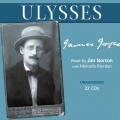
This applies equally to James Joyce’s Ulysses!

A subscriber to naxosspokenwordlibrary.com would have all available material automatically.

This site has been going for some years now, but it has recently been upgraded. Last week a new, key function was added: a bookmarking facility. So you can listen to William Hootkins’s astounding performance of Moby-Dick or the recording of Peter Whitfield’s excellent History of English Poetry and, when you need to take a break, bookmark it at the track point and come back to it later.

This makes it a truly useful resource for personal listening, for study or for sheer entertainment.

You want to hear how Jabberwocky sounds in the hands of an English classical actor?

Just go and listen!

You want to hear the final words of Socrates addressing his accusers in Ancient Athens?

Just go and listen!

You want to hear just one short story by Maupassant – say Old Boniface’s Crime?

Just go and listen!

You want to hear Mistress Wadman seducing Uncle Toby in Tristram Shandy? – you have a choice of either John Moffatt (in the abridged recording) or Anton Lesser (in the unabridged recording).

Naxos Spoken Word Library

Streaming audio player and script

Just go and listen! – to John Moffatt (in the abridged recording) or Anton Lesser (in the unabridged recording)!... You can listen to both and compare!

You can do this any time of the day or night.

So please visit www.naxosspokenwordlibrary.com.

Many audiobooks are only enjoyed once and not revisited. We only want to listen once to a thriller or most contemporary titles, even non-fiction. The classics are different. I know from the many letters and emails we get (and please keep writing to let us know what you like, what you don’t like, what you want!) that people listen again and again to their favourite readers. It may be Sean Barrett reading Dickens, or David Timson reading Sherlock Holmes or Sean Bean reading King Arthur and the Knights of the Round Table, or Geoffrey Palmer reading Kipling’s Just So Stories.

These are books which we would all expect to read again and again – and it is the same with listening! So it is always good to have the classics on CD or in MP3 form which can be listened to when away from the computer, in a different room, when walking or on the train, or in the car.

But the Naxos Spoken Word Library is a very useful new medium for audiobook lovers!

Incidentally, the Spoken Word Library site has been constructed and maintained by the Naxos AudioBooks parent company, Naxos, the classical music company founded by Klaus Heymann and is part of its important contribution to Western culture on the web.

Nicolas Soames

by Nicolas Soames

Drama on audiobook

1 December 2009

And so another year begins! For the sixteenth time, I look over the new releases of the coming months – and it remains a curiously exciting event, even though the Naxos AudioBooks team has been preparing for it months, preparing the texts, choosing and booking the readers, editing, mastering... and occasionally regretting the fish that got away!

Preparing a year’s programme, with a list based on the classics (but diverging when something interesting or slightly off-piste comes our way) is an immensely busy but stimulating business. And this is the case despite the fact that I am currently reading one of my Christmas presents, Seneca’s On the Shortness of Life. He exhorts against busyness and preoccupation, as opposed to reflection and being in the moment...

Ah!

Clare Wille

Clare Wille

Nevertheless, without preparation, foresight, and a bit of enterprise larded with a soupçon of good fortune, the future list would not happen. And when I look at the first six months of this year, I don’t mind trading a bit of a ‘shortening of life’ for it... a conclusion which I draw every time!

Two great anniversaries colour 2010 for Naxos AudioBooks: Elizabeth Gaskell was born in 1810, and Leo Tolstoy died in 1910 – and there can scarcely be two more differing nineteenth century novelists.

Clare Wille made such an impression with Gaskell’s Cranford that she was clearly the ideal reader for North and South which we issue in February in abridged and unabridged formats; and Patience Tomlinson shows her mastery of characterization and pace in Wives and Daughters which is released in March. Finally we introduce a new reader, Joe Marsh, who presents the charming tale of Cousin Phillis (May).

With Neville Jason’s reading of War and Peace unabridged already one of the pillars of our catalogue, we have chosen to present a new unabridged recording of Anna Karenina, read by Kate Lock as the Tolstoyan highlight of our year (March); and we are accompanying it with two shorter works, The Cossacks (February) and The Kreutzer Sonata (June) both read by Jonathan Oliver.

But we start the year with a very different sound and fury. The terrible Balkan conflict at the end of the twentieth century scarred millions of lives and there is no finer literary tribute than Steven Galloway’s The Cellist of Sarajevo based on the true story of a musician who played Albinoni’s Adagio in the rubble of the town to commemorate a particularly tragic event – the death of 22 people waiting in a queue for bread.

Roy McMillan

Roy McMillan

We present this moving novel in a way only audiobooks can do, with the music that was played at the time. The English cellist Sarah Butcher divides her time playing with the London Mozart Players, Glyndebourne Opera and her own ensemble The Chamber Players; but the observant among you will see she is also one of the main editors for Naxos AudioBooks, working particularly on projects that involve music. Here, she recorded a solo cello arrangement of Albinoni’s Adagio making the Gareth Armstrong reading even more affecting.

Don’t miss her comments on the effect music has in general, and on this book in particular.

For a very different, uplifting experience, we offer two titles at the start of the year. I urge you to have fun with Flanagan’s Run, Tom McNab’s entertaining novelisation of the 1930s TransAmerica run (from Los Angeles to New York) told with immense flair by vocal prestidigitator Rupert Degas (coming in February).

You can start (this month!) with Bulldog Drummond, the character created by Sapper in the 1920s that made The Saint and James Bond possible. It is read with great flair by Roy McMillan – and will be the first of a series featuring this post-World War One hero with assails baddies with vim and derring do.

So, Seneca, what can I say?

Nicolas Soames

by Nicolas Soames

Drama on audiobook

1 December 2009

‘I love listening to radio plays – it is like theatre of the mind.’ This is probably the most used comment on radio drama, and we all know exactly what it means. Radio drama/audiobook drama is, on the face of it, a rather odd beast. People seem to enjoy listening to plays through headphones or the radio speaker almost as much, it seems, as going to the theatre, which is very odd for an essentially visual medium.

But I know exactly what they mean. This week, I have immersed myself in Arthur Miller. I have listened to The Price (Timothy West in a surprise role as an American Jewish furniture appraiser), The Ride Down Mount Morgan (Brian Cox, a true star of radio as well as the big screen) and now A View from the Bridge... and they are stunning.

They are all recordings by the enterprising if idiosyncratic Los Angeles Theatre Works directed by Susan Loewenberg which still pursues its own special recording process: two performances in front of a live audience are recorded and mixed with one studio performance. Not the BBC Radio way, to be sure, but I must say the LATW achieves some engaging and immediate productions with leading audio stars: Martin Jarvis himself spends a lot of his time in LA, and frequently appears on their productions.

I can only recommend that you to search out LAWT if you like Arthur Miller – woefully neglected in his own country, and, maybe, slowly disappearing here. The easiest route I found is via a download from www.audible.co.uk.

Death of a Salesman

This month we release masterpiece, Death of a Salesman, but in the historic radio recording made in 1953 directed by Elia Kazan starring Thomas Mitchell as Willy Loman and Arthur Kennedy as his son Biff. It is a slightly strange adaptation for 1950s radio, made to fit in with the accepted radio timings... so, don’t sit there with the script.

But if you sit in front of the speakers and close your eyes, you are in for a real treat – there are some mesmerising characterisations. The sheer power of the play has an almost physical effect, perhaps just because we are not distracted by visuals and it is all in the mind. We can hear the torment, the pressure, the flawed aspirations, the self-delusion – oh, so very clearly!

Radio/audio drama is really a marvellous medium. We have done a number of full dramas on Naxos AudioBooks (hang the expense!), including 11 Shakespeares and an extremely fine Hedda Gabler from Juliet Stevenson and Michael Maloney – check it out, I urge you...).

And occasionally I produce plays for Radio 3 with NAB directors David Timson (Cyrano de Bergerac with Kenneth Branagh), John Tydeman (Mrs Warren’s Profession with Diana Quick in the title role) and Roy McMillan (Anouilh’s Becket with Samuel West and David Morrissey).

So I know the fun, the complications, the (occasional) tensions... the balance of a fine theatrical performance brought down to radio/audio size. And the sleight of hand: a small adjustment of script to announce the fact that someone is looking in through the window, or that a letter has fallen on the ground; or the subtle audio cue, of a kiss or the moon rising....

Othello

I also remember Michael Grandage, director of the Donmar Warehouse, one of the most enterprising of London theatres, say that he would rather have an audio production of his plays as a record than a video production. Audio, he felt, was more truthful to the essence of the play and the production than a bald video, he said. Which is why he proposed to us the joint production of his award-winning Othello on audiobook. I can say (without false modesty) that it is one of the finest audio productions of Shakespeare ever recorded.

The rub of the matter is that audio drama is expensive, costing as much as three times a regular audiobook to produce... and as most plays are contained on three CDs, and rarely sell higher numbers than a normal audiobook, the decision to go ahead, commercially, is a difficult one.

There is, however, a vast archive of exciting historic radio drama, if only one can get to it – and not just from the revered BBC Radio! In the US, from the 1940s until the late 1950s and even into the 1960s, radio was massively popular... and the great stars, like Orson Welles, Humphrey Bogart and Lauren Bacall, would make a film and then go and record an audio version. They too knew how to work with just a microphone in a studio!

And one must not forget that were many other strands of radio drama in those days, from The Lone Ranger and Hopalong Cassidy to The Shadow, Superman and other champions against crime. They can be great fun too... in any of the Western series, you will come across more coconuts than in a week’s holiday in the Caribbean.

We already offer some key classics of the radio past: John Gielgud’s Hamlet and The Importance of Being Earnest, the premiere radio production of Murder in the Cathedral and key productions of The Playboy of the Western World and The School for Scandal with Dame Edith Evans.

Pride of place, however, must be taken by the greatest original radio play of all time, an occasion where an electric performance unerringly matched a remarkable text: Dylan Thomas’s Under Milk Wood. The first 1954 recording of this work, featuring Richard Burton and Richard Bebb as the narrators and a wonderful Welsh cast including Hugh Griffiths as Captain Cat (this recording is not to be confused with the later and not quite up-to-the-mark recordings of the play by Burton) remains for me the shining beacon of audio drama.

You can listen to Under Milk Wood on Naxos AudioBooks either on its own or in the context of earlier plays by Dylan Thomas (Quite Early One Morning and Return Journey to Swansea), in which you can see how the seeds for Under Milk Wood (genius though it was and is) were sown.

Nicolas Soames

by Nicolas Soames

20th century and proud of it

1 November 2009

I sometimes look at our release schedules, and even the entire Naxos AudioBooks catalogue, and I wonder at the rationale behind it all. Classics, of course! But this covers such an immense range that they almost cannot usefully be mentioned in the same breath.

For example, take the two great 20th-century classics that we release this month: The Master and Margarita and The Leopard. How different they are!

Bulgakov’s satire on Soviet life was finished just before World War II. It has the ‘feel’ of a novel written much later – certainly when compared to another Russian novel of around the same period, Sholokhov’s And Quiet Flows the Don, which follows the tradition of the great Russian epics. The Master, especially in the really imaginative and free-flowing reading by Julian Rhind-Tutt, is far more akin to Flann O’Brien’s The Third Policeman, even though there the pace and humour is decidedly Irish (especially in the Jim Norton reading)!. You could have a lot of fun listening to one followed by the other.

McCarthy
is ‘literary’
en route
to ‘classic’

The Leopard, on the other hand, is more in the tradition of the 19th-century novel rather than the 20th. Lampedusa’s nostalgic view on the demise of a Sicilian aristocratic family, as Garibaldi urges Italy towards unification, has a decidedly autumnal feel. It comes as a surprise to note that it was begun after the conclusion of World War II and published posthumously as late as 1958. Time is not necessarily an indicator of style!

I mention this because in the last couple of weeks I have also lived in the 20th century in other ways. I saw the fine Glyndebourne production of Janáček’s Jenůfa under the young conductor Robin Ticciati. This remarkably moving work (the composer’s first opera, premiered in 1904) has a sound-world which is definitely 20th century (what an individual sound palette he produced!) yet the subject matter is immured in the mores of traditional village life. The contrast of subject and language makes the suffocating environment of village life (in this case!) even more affecting – the conflict in itself, perhaps, indicating the social changes to come.

Then, crikey Moses, another shift of perspective: I read Georgette Heyer’s Venetia! This advance notice here! we are issuing next year. With my personal background in judo and contemporary music, I didn’t think that I would last very long in pastiche Regency romances... but what fun Cotillion (read by Clare Wille) and Sylvester (read by Richard Armitage) have been! And Venetia is more of the same... for Georgette Heyer was a mistress at fashioning a jolly good yarn within the boundaries of propriety. Or maybe. Venetia starts with my favourite Heyer sentence:

“ ‘A fox got in amongst the hens last night, and ravished our best layer,’ remarked Miss Lanyon.”

I knew we were on to a good’un after reading that line. And what a fox Lord Damerel turns out to be.

No COuntry for Old Men

Then, there arrived in the office the first delivery of our new recording of McCarthy’s No Country for Old Men. I couldn’t resist having another listen to it, though it is about as far from Georgette Heyer as can possibly be.

Violent, yes; but what remarkable language, and tension beyond belief. I had recently, on a flight, polished off one of Lee Child’s Jack Reacher thrillers, which was also violent and a page-turner... but in a manner that I felt exploitative. I was being manipulated to turn those damn pages... and I just wanted to finish it as soon as possible.

McCarthy, however, is ‘literary’ en route to ‘classic’, unremittingly bleak though he may be. And this is underlined in the recording.

It has become so common for English, American and Australian actors to transplant themselves to different countries with appropriate accents that I scarcely hesitated in acceding to the personal request of William Anderson, who runs Naxos AudioBooks in the US, for the outstanding Irish actor Sean Barrett to read No Country for Old Men. If he can do the panoply of Dickens’s characters (have you heard his Bleak House??) then Texan ain’t difficult. Above all, of course, he makes characters live.

Hearing him in the studio doing the most frightening hit man of all time (Anton Chigurh), the Sheriff who for the first time finds himself out of his depth, and the hunter Moss (who becomes the hunted), as well as the myriad other characters, it was clear that Sean remains at the peak of his powers.

Sean Barrett

Sean Barrett

Appropriately, Sean is very laid back. He lives in North London, about 30 minutes’ walk from the studio. He leaves his house at 9am, and, rain or shine, in a mackintosh worthy of Colombo, he weaves his way through the pleasant streets of Hampstead to arrive at the studio full of fresh air and eager to start. All his careful preparation has been done, so his satchel is light the script is left in the studio, which pays dividends when he is reading Dickens. Whether, when tramping the pavement, he replays the characters of John Jarndyce or Mr Tulkinghorn on his way to Bleak House, or Sheriff Ed Tom Bell or Anton Chigurh on his way to No Country, I do not know. Maybe he just muses. I must ask him, one day.

Suffice to say that when he settles himself in front of the microphone, he is that book. For me, Sheriff Ed Tom Bell looks like Tommy Lee Jones, but he sounds like Sean Barrett.

For a totally different take on Cormac McCarthy, pop over and listen to Jim Crace’s six-minute satire on Blood Meridian. If you have listened to our chilling recording read by Robert G. Slade, you may enjoy the relief of Crace’s lampoon, though it will never dispel the power of the original!

And there we are, back with satire which is where we started!

Nicolas Soames

by Nicolas Soames

A Quarter of a Millennium

1 October 2009

I wish either my father or my mother, or indeed both of them, as they were in duty both equally bound to it, had minded what they were about when they begot me.

These are the opening lines of one of the greatest of comic novels: Tristram Shandy.

The autumn is falling upon the 250th anniversary of its first publication, so it was high time that I went up to Shandy Hall in the exquisite North Yorkshire village of Coxwold to meet its curator, the enthusiastic Shandean Patrick Wildgust.

The visit to the home of the Revd. Laurence Sterne was considerably overdue.

After all, it was Patrick who, demonstrating due care and diligence, listened to the penultimate edit of Anton Lesser’s amazingly energetic and imaginative unabridged recording of the aforesaid Tristram Shandy, and pointed small things that had slipped through the net.

What would English literature do without people like Patrick!

A number of people thought that way actually... enough to fill the Coxwold Village Hall to listen to the annual Sterne lecture, given this time by Adam Thirlwell, novelist and critic, who, he revealed, for many years kept a card of the famous Joshua Reynolds portrait of Sterne on his writing desk. A rather special kind of homage for a 21st century writer.

So, there we were, about 60 people from all over the world, varying from Elizabeth David’s biographer Lisa Chaney to Brigitte, an academic and Tristram Shandy devotee, over from Strasbourg, one of quite a number who had travelled from mainland Europe. This is not surprising because, as Thirlwell pointed out, Sterne has always been more widely revered and respected in Germany and France than the UK. I suppose that even after all these years, his whacky life, his whacky writing and his whacky demise (buried three times, reputedly discovered in bits on the anatomist’s table by a friend before finally finding his rightly resting place in the graveyard of St Michael’s Church, Coxwold proved a bit too much for the straight-laced English. Goethe loved Tristram Shandy. So did Stendhal and so did James Joyce. (Of course... without Tristram Shandy there could have been no Ulysses and certainly no Finnegans Wake).

Shandy Hall

Shandy Hall, Coxwold, Yorkshire

Talking of James Joyce, I drove up to Coxwold from the Naxos AudioBooks office in Welwyn, via York to have lunch with Roger Marsh, who directed all our James Joyce recordings... and discovered that, in his role as Professor of Music at York University, he is instituting a special Tristram Shandy project this autumn with his students...

Adam Thirlwell’s lecture was learned and absorbing. He talked about the nature of Hobby-Horses (maybe, he pondered, what were called Hobby-Horses in the 18th century are called neuroses in our day); and commented that in Tristram Shandy, “all characters are mad, all are sane and all have Hobby-Horses.”

He added that not only is TS one of the greatest comic novels, but it is also ‘the dirtiest novel in world literature’, with more veiled references to intimacies than have yet been noted...

Anyway. after the lecture, we walked back to Shandy Hall for a late supper and wine in Sterne’s dining room, with the wonderful painting of Widow Wadman encouraging Uncle Toby to looking in her eye in full view... and a host of other memorabilia. And Anton’s CD box much in evidence.

Favourite passages flowed through the conversation, and admiration by the bucket load – especially the remembering the abundant humanity of the novel, where every character, even Dr. Slop, is painted with a smile.

My wife and I retired to the Fauconberg Arms, a delightful hostelry in the main street, just yards from Shandy Hall, and emerged early the following morning to visit the churchyard. There, nestling against the church wall, is the new gravestone, with the black page 73, under which are reputedly the head and a limb of Sterne.

And in the porch, the original gravestone erected by two masons in St George’s, Hanover Square. They didn’t know Sterne (who died in London) but admired him and loved his work and wanted to remember him. Carved into the stone, and mainly readable, it says:

Ah! Molliter ossa quiescant
If a sonnd head, warm heart, and breast humane,
Unsullied worth, and soul without a stain;
If mental pow’rs could ever justly claim
The well won tribute of immortal fame,
STERNE was THE MAN, who with gigantic stride
Mow’d down luxuriant follies far and wide.
Yet what, though keenest knowledge of mankind
Unseal’d to him the springs that move the mind;
What did it cost him? Ridicul’d, abus’d,
By fools insulted, and by prudes accus’d.
In his, mild reader, view thy future state,
Like him, despise, what twere a sin to hate.

This monumental stone was erected to the memory of the
deceased by two BROTHER MASONS, for although
He did not live to be a Member of their SOCIETY,
yet all his incomparable Performances evidently prove
him to have acted by Rule and Square; they rejoice
in this opportunity of perpetuating his high and
irrepressible Character to after Ages.

If you have read and loved Tristram Shandy, I urge you to listen to Anton Lesser’s glorious reading of it. If you have heard Anton’s reading, it won’t need much urging to get you to read the book and book a visit to Coxwold. If you go there soon, you can see a remarkable exhibition in building adjoining Shandy Hall. Leading artists, writers and composers, including Patrick Hughes, Tom Phillips, Harrison Birtwistle, Michael Nyman and many others have contributed to an exhibition, the theme of which is simple: illustrate the Black Page, Page 73.

The wittily varied results can be seen – mostly anonymously – though few will forget the 3D visual sleight of hand by Patrick Hughes.

So, a public thank you to Patrick Wildgust, who looks after the house, the gardens, and the literary legacy of Laurence Sterne with a bold energy and imagination. ‘Nothing is so perfectly amusing as a total change of ideas.’

I leave you with one of my favourite lines (curiously, one also chosen by Adam Thirlwell to quote)

‘A man’s body and his mind, with the utmost reverence to both I speak it, are exactly like a jerkin, and a jerkin’s lining; – rumple the one, – you rumple the other.’

Nicolas Soames

by Nicolas Soames

Seven CDs – eight hours and more – and not a dull moment!

1 September 2009

Sometimes, titles don’t come easy.

When Peter Whitfield proposed The History of English Poetry, we at Naxos AudioBooks, all thought it was just what we needed to sit beside The History of Classical Music, The History of Opera, The History of Theatre, The History of English Literature and The History of The Musical.

All the others had been commissioned by us for audiobook presentation, but this was slightly different: Peter had written and self-published his (much longer) History and we could see that, in accordance with all his other work, on top of the firm scholarly base was a very well-written text which had a sense of quirkiness and strong opinions. All that was needed was to abridge it down.

But we wanted to include American poetry too – after all, at least since the start of 20th century (and occasionally before) poetry from America had influenced poetry in the UK, as well as vice versa.

So, Peter incorporated a very useful and apposite overview of poetry from America too... and we went slap bang into that problem of the title. Should it be The History of Poetry in the English Language? It is more correct and describes more precisely the content... but it didn’t trip off the tongue. Did The History of English Poetry say it all?

This is much
more than a
quick and
slightly
predictable
overview of
the subject

Peter even waved the banner of his history by starting with a wonderful (prose) quotation from Emily Dickinson

If I read a book, and it makes my whole body so cold no fire can ever warm me, I know that is poetry. If I feel physically as if the top of my head were taken off, I know that is poetry. These are the only ways I know it.

In the end, we stuck with simplicity, and invited Derek Jacobi into the studio to read the narrative. David Timson had agreed to doff his reading hat and don his producer/director hat, organise the hundreds of poetry extracts (some from our extensive back catalogue and many newly recorded by a team of four) and work with Sir Derek in the studio.

Now, Derek is one of England’s finest readers, particularly, I feel, in a script of this kind. As a classical actor, English poetry is deep in his bones, and so first and foremost he could convey a personal enthusiasm. And, when the occasion demands, he can deliver illustrative lines in a natural manner that is second to none.

He lives just 20 minutes walk away from Motivation Studio where most of Naxos AudioBooks recordings take place, and loves to work there... ambling down the hill from Hampstead early in the morning, and settling in the studio for a day’s (in this case, two days) reading.

But when you listen to this recording – and I urge you to do this – you will I am sure realise that this is much more than a quick and slightly predictable overview of the subject. It is one of the most stimulating texts we have ever presented: the combination of Jacobi and Whitfield has brought exceptional clarity, sheer enjoyment and a sense of discovery to the history of English poetry.

Derek Jacobi

Derek Jacobi

This is no list of the stepping stones. The big poets are all there, of course; but so are many minor ones. Time and again Whitfield urges one to look more deeply into poets ‘whom only scholars study now’. He makes a case for Spenser’s The Faerie Queene, a particular favourite of mine since John Moffatt recorded selections for us a decade ago; he digresses into an Elizabethan translation of Virgil by one Richard Stanyhurst, while pointing out the role played by translations from Greek and Latin; he notes that of the fifty or so figures represented by Johnson’s Lives of the Poets less than a dozen are now known but all fulfilled Johnson’s definition of poetry as the art of “uniting pleasure with truth”.

With lively strides, Whitfield and Jacobi take us through the successive centuries, dealing always in an interesting manner with the established figures, and often deftly avoiding the trap of quoting the obvious lines in order to make us think afresh... to work a bit harder.

Of course, Keats, Shelley, Byron, Clare (a rather moving section this), Tennyson, Arnold and many more populate the 19th century, but he finds room for Emily Brontë, William Morris and Swinburne’s excesses before leading into the new territory of Gerard Manley Hopkins. He draws a very interesting parallel in life and even art between Hopkins on one side of the Atlantic, and Emily Dickinson on the other... a useful perspective on the development of poetry.

Whitfield agrees with Hegel that ‘inner space’ is the essence of the poetic act. He himself has written poetry all his life, and this commitment to the form has informed this survey.

Seven CDs... eight hours and more... and not a dull moment I assure you!

And I hope this will encourage ventures into our rapidly expanding Great Poets series. I can say that only the other day we were preparing, for release next year, volumes on poets as disparate as Petrarch and Browning...

Nicolas Soames

by Nicolas Soames

Joanna Lumley: Blithe Spirit

1 August 2009

Our English newspapers have been covered with pictures of the actress Joanna Lumley bedecked with marigolds being welcomed by the Nepalese as the champion of the Gurkhas. Joanna’s success in making the British government overturn their churlish resistance to giving the Gurkhas British residency after a lifetime of service in the UK army is a typical example of her forthright personality.

Of course, having been combative and resplendent as Purdey in The Avengers, and then wonderfully decadent as Patsy Stone in Abfab, it is only too easy to see her only as a popular screen actress – Joanna also has 102 episodes of Coronation Street to her credit, and 34 episodes of Sapphire and Steel.

She has done some theatre, but curiously, she has done very little radio.

However, when we came to record Noel Coward’s ever-green comedy Blithe Spirit, the director, Sheridan Morley asked her to perform the part of Elvira, the first wife – deceased – of Charles Condomine. No one is more surprised than Madame Arcati herself when her psychic power brings Elvira back into Condomine’s world, upsetting the balance of his marriage to his second wife.

Having a star
in the studio
makes for a
very different
atmosphere

Now, audiobook drama is a very different medium to work in for someone accustomed to a camera, but Joanna accustomed herself to it very quickly, reprising a role she had played in the theatre. She was surrounded by a cast of friends – Corin Redgrave as Charles Condomine, Kika Markham as Ruth; and with Thelma Ruby as Madame Arcati, the two days recording in Motivation Sound Studios were good fun for all.

So, if you haven’t noticed our recording, or Joanna’s rare audiobook drama performance, catch up with it on CD or download, and have some summer fun. With the right sales and distribution, it may even top the audiobook charts in Nepal.

There is no doubt that having a star in the studio makes for a very different atmosphere. It is noticeable right from the start, when we gather on the first morning for a read-through. This is important, because it is the only time that we all hear the play from beginning to end (until the final edit!) and when everyone can hear the characters.

It is often said that in radio drama, casting is 80% of the task – get it right and the recording just flows. Make a mistake, and the director can face a tough job: perhaps the voices are too similar; or the nature of the performances are too dissimilar, one going for larger than life and the other for minimalism! In a stage production, there is sufficient rehearsal time to sort this out...but in audio drama there isn’t. One read through, then rehearse/record!

And often we record out of order, in order to maximise efficient use of actors’ time, or because of props. With modern mixing desks, one can change atmosphere quickly from one setting to another, but it can still be an undertaking to change from inside the castle to outside the castle – from stone floors to grass!

Joanna Lumley

Joanna Lumley

What is gratifying to see is the way (most) stars just mix in. No special caravan or dressing room for Kenneth Branagh or Juliet Stevenson or even Paul Scofield when he came to do King Lear. The stars seem particularly to enjoy the informality of it all, and respect and admire the skills of the radio actors who may do five dramas a week and two on Sundays and take multiple roles, even in succeeding scenes...

Immensely skillful, these career radio actors know just how much to adjust their voices to suit the situation, just how to approach a microphone to ensure that it sounds as if they are coming across a meadow, or entering a room, or turning away in disgust; just how to stab an enemy or fall dead to the floor without sounding odd – and all without a trace of a script rustle. They create magic by their experience and sleight of voice and make Agincourt come alive.

Audio dramas are expensive to record but we do them as often as we can – and most actors – such as Joanna Lumley – endeavour to make time for them. They know that when they come to the Naxos AudioBooks studio, they have the added benefit of doing a great classic script, where the words flow and the characters have depth.

We have a growing list of dramas. The bedrock is the 11 key Shakespeare plays (Othello twice!) we have made... and we have reissued one classic radio recording, John Gielgud’s Hamlet (1947). There are eight recordings of nineteenth and twentieth century plays, from Lady Windermere’s Fan to Pygmalion to Samuel Becket; but there is also Sophocles’s Oedipus.

There is growing list of historic radio recordings – Robert Donat as Becket in the original recording of Murder in the Cathedral came out last month, but it is also worth checking out The School for Scandal with Edith Evans and Cecil Parker.

And if you want to hear our great Joyce reader, Jim Norton, in another role, listen to Conor McPherson’s Port Authority, an intimate play from one of the leading contemporary playwrights.

But, perhaps bedeck Joanna Lumley with virtual marigolds, and start with Blithe Spirit!

Nicolas Soames

by Nicolas Soames

THE Cock and Bull story

1 July 2009

One of the ineluctable facts about audiobooks is that the voice predominates. You can listen to Sean Barrett read Bleak House, or Anton Lesser read The Old Curiosity Shop, or David Timson read Our Mutual Friend. They are all reading Dickens. But it doesn’t seem to matter – one doesn’t expect to hear the ‘voice’ of Dickens.

But were you to listen to Anton’s abridged version of The Old Curiosity Shop and decided the novel was so wonderful you wanted to hear it unabridged, and you switched to another reader, you would, most likely, get a shock!

Who is this voice? That is a different character! Oh no!

It takes some getting used to. For some reason, it doesn’t make such a massive difference with a remake of a film, or in the theatre, of course... but with an audiobook, with that special person reading to you alone for such a long time, it can be very jarring.

Anton Lesser

Anton Lesser

So – for all of you who have heard John Moffatt’s hugely entertaining abridged reading of The Life and Opinions of Tristram Shandy, Gent, be prepared. Here, marking the 250th anniversary of the first publication of this milestone in English literature, is the unabridged version – read by Anton Lesser! And, it must be said, produced by Roy McMillan – for the two of them spent days and days in the studio working on Laurence Sterne’s masterpiece, to get it just so!

Now let’s be very clear! There are reads that are easy. And there are reads that are middling. And there are reads that are difficult. And there are reads that are off-the-scale. I would say Proust is difficult. I would rate Ulysses somewhere between difficult and off-the-scale. Finnegans Wake is off-the-scale and then some.

And so is Tristram Shandy.

Is it something to do with it being Great Literature AND being a comedy AND modernistic AND all jumbled up? I suppose so.

But it is also about the energy required to keep the longest cock-and-bull story in the world going – for 15 CDs. It is about bringing some of the most delightful characters in English literature to life – and keeping them alive, even when they are in the shadows.

Anton Lesser is, of course, one of the stars on Naxos AudioBooks. His very first recording for us was an abridgement of Paradise Lost. He remembers going on until 11  o’clock at night to get it done, although it was a stroll in comparison to Tristram Shandy.

Anton is an
immensely
practical
person.
He built his
wife a yoga
studio in
their garden

Similarly, he took the unabridged Paradise Lost in his stride. As for Homer (Iliad and Odyssey) or numerous Dickens titles, or Hamlet – all were more visits to the park, when compared with this, his latest Naxos AudioBooks venture.

‘I have never done anything so hard,’ he said as he came out of Motivation Studios in North London. He had been in there for days – with his few breaks providing serious rest time.

A trained architect in his pre-actor days, Anton is an immensely practical person. He built his wife a yoga studio in their Wiltshire garden, and when I say built, I mean foundations, walls, roof and rafters, shiny wood floor and all.

He built garden features: a pond (very eco); a pleasant area for outside entertaining.

So, when he went into the studio to do Tristram Shandy, he was fit, bronzed and ready.

When he came out... he was pale.

He is a great actor accustomed to scaling heights. Richard III, Hamlet, Petruchio and no end of leading characters in modern plays have all been taken in his stride. Right now, he is wowing audiences in A Doll’s House at the Donmar Theatre.

But Tristram Shandy was another thing again.

‘Wonderful... but I want to go home now,’ he said. Eighteenth-century effervescence and unpredictable Sternian sentence construction meant that every page was like going at speed down a dry river bed, over rocks big and small, fixed and loose, with occasional puddles to slip in.

Then there are the characters: Tristram’s father and mother, Uncle Toby, the servant Trim, Dr Slop, the parson Yorick, and Mistress Wadman. And Tristram Shandy himself.

Both Anton and Roy spent a long time preparing for the recording... working out how to do the oddities such as blank pages, Latin pages, mumbles, diagrams, music, and goodness knows what. They were assisted, at the end, by a total enthusiast, of the kind without which a project like this cannot happen: Patrick Wildgust.

Shandy Hall

Shandy Hall, Coxwold, Yorkshire

Patrick owns Shandy Hall: Sterne’s house in Coxwold, Yorkshire where he lived as a ‘witty and eccentric local parson’. It was Patrick who went through the penultimate edit with a fine tooth comb, making suggestions here and there, to ensure that it was the most faithful and yet inventive performance (this isn’t just a reading!) of Tristram Shandy possible. He even provided the cover picture: a charming account of the intimate chat between Uncle Toby and Mistress Wadman!

So – I commend it to you. It is a delight, certainly with its longueurs, but with some of the funniest scenes in English literature, and one of the most engaging seduction scenes as well.

And I also raise my glass to John Moffatt, an outstanding reader in his own right (well-known on BBC Radio 4 as Poirot). As Anton knows, I did ask John first of all if he would like to do it. He smiled in his gentle way, and declined. Now in his late 80s, John’s remarkable career has seen performances with John Gielgud and Noël Coward, and many other great actors of the 20th century. Tristram Shandy uncut was a fence too high for him to leap in 2009.

But this has meant that Naxos AudioBooks is PROUD TO PRESENT two voice-views on the greatest shaggy dog story. I am sure you will be entranced by each! Surely, Tristram Standy’s 250th anniversary should be marked by listening to one or t’other – or both!

Nicolas Soames

by Nicolas Soames

Book Expo, Javits Center, New York

1 June 2009

William Anderson during a rare quiet moment at the Book Expo New York

William Anderson during
a rare quiet moment at
the Book Expo New York

I find book fairs very stimulating things: the gathering together of so many people working in the differing strands of activites which comprise the book industry makes for something extremely colourful, energetic, busy and above all varied.

As I write, I am at Book Expo in the Javits Center, New York. We have a stand here – one of nearly a thousand – but in a section dedicated to independent audiobook companies. Beside us is Recorded Books, opposite us is Blackstone Audiobooks and Brilliance. We are colleagues but competitive colleagues... so we see who is visiting each other’s stand and note...

Actually, the first day was so busy that William Anderson, Naxos AudioBooks US sales director, and I had no time to watch elsewhere... non stop visitors from 9 a.m. through to after 5 p.m.

Now, many stands have little freebies of one kind or another, and William had a bowl of mints packaged in a small box, with covers of Moby-Dick on one side and The Once and Future King on the other. He had to keep the bowl refreshed constantly. Very few people walked past the stand without glancing at the table at this bowl. It didn’t say mints, and many thought it was a tiny MP3 player – but surely not with such massive unabridged recordings!

They picked up the box. They shook it. It rattled. You could see a slight frown of puzzlement appear on their brows.

‘Cool mints,’ we explained.

‘Oh!’ they said.

‘Please take one.’

They did, and then cast their eye along the table. There was David Timson’s 60 CD box set The Complete Sherlock Holmes. Wow! There was The Master and Margarita with Julian Rhind-Tutt reading the new Michael Karpelson translation. Stunning! And our best seller, the unabridged Ulysses – surely one of the most handsome boxes in audio.

And there was the spinner with many of our lead titles... Junior Classics, the new In a Nutshell series, the Young Adult Classics series, etc...

My First Classical Music Book

But also, flat on the table, was a traditional book, My First Classical Music Book by Genevieve Helsby, a delightful introduction for 4–8 year olds with engaging drawings by Jason Chapman. Almost without exception, the passers-by picked it up and opened it. Smiled. Some asked boldly if it was a ‘sample’ copy. Meaning free.

‘Er, no..’

‘Can we buy it?’

‘I am afraid not,’ we said. ‘Shops, Amazon...’

Disappointment, but acceptance.

Librarians, booksellers, other publishers, foreign rights enquiries from China, Korea, Europe generally... they all were interested, and it is looks as if we have a bit of a best-seller on our hands.

What they didn’t know is that sales are going so well that whenever we had a tiny spare moment, we were surreptitiously on our PDAs (Blackberry for William, Palm Treo for me) trying to speed up replacement supplies from our printers in China. X000 copies to be shipped to Hong Kong and routed across the Pacific to Naxos of America in Franklin, Tennessee, while X000 copies to be shipped direct to Select, the Naxos UK distributor. ASAP pls. We have orders awaiting... Then we were back on the PDAs to the UK to confirm, etc...

This is what fairs like the Book Expo are about. We have meetings studded through the diary during the day – especially important in a country as big as the US, when it is one of the few occasions we can easily see our associates and colleagues without undertaking major travel.

Our Eastern rep group comes – five salesmen and women and William explains some of the key fall titles coming, although the detailed work will happen later. New and existing download service providers (DSPs) come to talk about delivery, promotion, formats. Readers slip their CDs across the table, saying how much they would love to read the classics. Writers too, with 57 varieties of texts, fiction, non-fiction, adult, children.

Then there are the providers of book displays, of marketing services, of cover designers, studios, CD pressing plants. Even the maker of the box in which we put our cool mints happened to pass by!

We stand in the booth, taking on all comers. Behind us, there is a TV screen which sometimes shows videos of Juliet Stevenson or Sean Barrett reading; sometimes rotating covers. Sometimes Tom and Jerry. NO! We would LOVE to have a bit of Tom and Jerry to lighten the load a bit... but there was no chance of that! But this is another facet of these fairs. After three days, you get exhibition fatigue and stress sets in.

we were
surreptitiously
on our PDAs
trying to
speed up
replacement
supplies...

Sentence structure goes awry. You get a bit light headed and are in danger of making deals which ought not to be made. Or turning away opportunities that should be pursued. After all, the action doesn’t only take place on the stand. At night, it is much the same, only off-piste. The first night, for example, I was the guest of ever-fizzing Sourcebooks and its founder Dominique Raccah (dubbed one of the top 50 women in publishing, I note), with whom we have done some co-productions. It was an evening full of enterprising ideas. Tip: watch the Sourcebook space for a really interesting poetry project in the summer that I am keen to support.

Then there was a quieter supper, just William and myself with Robin Whitton, founder and editor of AudioFile magazine, the bible of the US audiobook industry. We looked at the past, the present, the future... where we are going with digital, what is going to happen to CD... she urged me to listen to the main winner of the Audies, Neil Gaiman’s The Graveyard Book which the author read himself.

We have people making a special journey across the Javits Center, only to say how much they enjoyed a particular recording – it could be Plato, or Othello with Chiwetel Ejiofor... or King Arthur and the Knights of the Round Table. We graciously accept the praise – after all, that is what WE feel about these recordings... otherwise we wouldn’t make them!

Earlier today, one man and his daughter came across. She was like the girl in Little Miss Sunshine. She dipped into the mints bowl fast. Meanwhile, her father was saying how much he LOVED Naxos, it meant so much to him. It changed his life.

William and I always hold a little back in reserve... we are never sure whether they are going to say they love the audiobooks, or the music. Of course we too are proud of the music and the classical riches in the largest and most varied classical music label in the world. But, c’mon, guys, this is a BOOK show, and we do AUDIOBOOKS, so please don’t say you have never listened to, or have not even heard of, our wonderful audiobooks!

Anyway, this guy was waxing lyrical. Then came the killer blow.

‘There isn’t a Greek island like it for walking in the mountains, and the air, and that little town rising out of the harbour... sooo sweet!

C’MON! GIMME A BREAK!

Time to pack up and go home.

Nicolas Soames

by Nicolas Soames

Recording Finnegans Wake

1 May 2009

One can’t really imagine the effect Finnegans Wake had when it was first published 70 years ago – on 4 May, 1939. It had taken Joyce 17 years to write, starting after he took a break following the publication of Ulysses. It had a similar effect on the literary public as Stravinsky’s The Rite of Spring had three decades earlier – sharply divided responses. Some writers and critics thought it was a masterpiece, while others were furious. Most were simply baffled, and so it has remained.

This is why I felt it was important that our Joyce team of the actors Jim Norton and Marcella Riordan, and composer/director/Joyce expert Roger Marsh, who all served Ulysses so well, should tackle Finnegans Wake.

Of course, this was a task of a very different order, as anyone who has read even the opening page will understand.

But, Roger took time off from composing and produced a 4 CD abridgement, and Jim and Marcella set about working on the text. This was back in 1998, and the problem was that Jim was in the middle of his world tour starring in Conor McPherson’s The Weir. He had time during the day, but was in the theatre at night... and the production was moving from London to New York to Dublin to Australia and elsewhere.

Jim Norton

Jim Norton

Finally, we decided to record where it should be recorded, in Dublin itself. Jim didn’t think it would be a problem to spend the day in the studio and the night on the stage of the famous Gate Theatre giving one of the finest performances of his long and distinguished career. He is a bit remarkable in that way.

So, I organised a studio on someone’s recommendation... Roger and I flew to Dublin (Marcella was to record the Anna Livia Plurabelle sections later) and, on Monday morning, we started. I remember it as clear as day. We arrived in the studio, all rather daunted by the task that lay before us – but we had no idea what that meant!

We arrived to find the ‘recommended’ studio was in a building with a dance school. Modern dance and ballet. It was a ballet day. Lithe bodies were milling around, honky tonk pianos were thumping out rhythms and there was the thump thump of many feet.

‘Hmmn,’ I thought, ‘that studio had better have some spectacular sound proofing...’

Well, it didn’t. ‘Oh, it would be fine,’ the engineer assured us, thinking of the four-day booking.

It wasn’t.

Off Jim went:

riverrun, past Eve and Adam’s, from swerve of shore to bend of bay, brings us by a commodius vicus of recirculation back to Howth Castle and Environs.
Sir Tristram, violer d’amores, fr’over the short sea, had passen-core rearrived from North Armorica on this side the scraggy isthmus of Europe Minor to wielderfight his penisolate war: nor had topsawyer’s rocks by the stream Oconee exaggerated themselse to Laurens County’s gorgios while they went doublin their mumper all the time: nor avoice from afire bellowsed mishe mishe to tauftauf thuartpeatrick not yet, though venissoon after, had a kidscad buttended a bland old isaac: not yet, though all’s fair in vanessy, were sosie sesthers wroth with twone nathandjoe. Rot a peck of pa’s malt had Jhem or Shen brewed by arclight and rory end to the regginbrow was to be seen ringsome on the aquaface.

Thump thump thump. Joyce would have loved it. No he wouldn’t. Yes he would...

After ten minutes, I made an executive decision, and by minute twelve we were out of there, walking to a coffee house to regroup. For decades, Jim has recorded radio plays, voiceovers, books and more in Dublin and he knows most studios. Between us, we found an empty studio, an engineer, and had decamped to Totally Wired at Lime Street Sound, just by the Liffey. Within an hour, Jim was seated on a stool, one leg on the floor, one leg hooked on a crossbar with his thick script on the lectern, looking through the glass to the control room where Roger had, in front of him, Page 1.

And so off they went again

riverrun, past Eve and Adam’s, from swerve of shore to bend of bay, brings us by a commodius vicus of recirculation back to Howth Castle and Environs.

There was nothing to be heard apart from Jim reading his way through this magical, mysterious, confusing, funny, odd script. Singsong with Irish lilt laced with languages and references from the world over, a few of which you understood strangely, or thought that you did.

And so it went for four days. The engineer was totally bemused, people in the studio would wander past the plate glass and just gape in awe as Jim read with understanding mingled with incomprehension but always with aplomb.

‘Ah, Roger, what was this all about? I can’t remember...’

‘Well, Shem the Penman is....’ and off Roger would go, clarifying to the point, and occasionally slipping in some of the underlying Hungarian or Sanskrit references that may or may not have been really germane to pronunciation but would help Jim colour the sense and the meaning.

‘The thing is,’ Jim admitted cheerfully, ‘I prepare the night before, but sometimes it slips my mind...’

As well it might. Jim read from 9.30 a.m. to 5.30 p.m. – office hours. Then he would slide off the stool, walk out and amble up the road, crossing the Liffey and on to the Gate Theatre for a short rest before an evening of The Weir. Unbelievable.

Then he would sign autographs, go home – he was staying with his sister within sight of Joyce’s Martello Tower – and study for the next day’s recording. And so on. Unbelievable.

A few times, less than a handful over the four days, Jim would ask a question about meaning and Roger would say: ‘Nobody knows. Joyce was asked this and he admitted that he had forgotten. Just read it.’ And Jim did. And it sounded great.

And so the bulk of Finnegans Wake was recorded.

Marcella Riordan

Marcella Riordan

But there was still Marcella Riordan’s Anna Livia Plurabelle to do. And this was just as remarkable. Roger is Professor of Music at York University, one of the key music departments for contemporary music. It has a good studio – our unabridged Ulysses was recorded there. So Marcella went to  York, arriving early.

No one who has heard her remarkable performance of Molly’s soliloquy which closes Ulysses will be surprised, but she prepares thoroughly and arrives with a total performance in her. Of course, maybe more than in any other text, there is no one view of ALP in FW because the meaning is so variable. Would her view differ from Roger’s director’s view?

He reported that listening to Marcella read ALP was, really, the clear brook winding its way over the stones downwards to the sea. It was music. He sat and listened and marvelled.

And when she had finished, she hugged him, as she does, and caught the train back to London.

Then Roger’s writing work began. Finnegans Wake is a wonder, he says, and not that difficult. (Yeah!) People need just a bit of guidance, a little map of directions.

• He wrote helpful notes to give an overview
• For every index point on the CDs, he wrote a little explanation of what is happening.
• He made sure that in the booklet was the abridged script so that listeners could follow the words on the page (some of the jokes and references are visual).

And then it was finished.

All this happened in 1998, but we decided to mark the 70th anniversary of the first publication of one of the giants of world literature by reissuing it with a new cover and package, but with all the elements as pristine as ever.

There have been some milestone recordings for me as Naxos AudioBooks has expanded... and this is certainly one of them. If you have ever thought you want to try to get to grips with Finnegans Wake, but have been daunted by the apparent difficulties, I suggest you buy this set. Then settle down at home, with the booklet in front of you; perhaps read the main essay beforehand for the background; and then put CD 1 into the player, (or click on the iPod – the notes are all there in a PDF file) and start on page 1.

riverrun, past Eve and Adam’s, from swerve of shore to bend of bay, brings us by a commodius vicus of recirculation back to Howth Castle and Environs.

You are in for a treat.

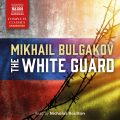
AND – this is also true about our new recording of The Master and Margarita by Mikhail Bulgakov. This delightfully engaging, quirky twentieth century Russian classic is read with grand humour and character by Julian Rhind-Tutt in a fine new translation by Michael Karpelson. We are offering this as a 7 CD abridgement this month, with an unabridged version coming on 13 CDs in November. Caroline Waight was executive producer for the project and deserves the credit for making it happen, while Roy McMillan, a regular and creative member of the Naxos AudioBooks team steered the recording into life.

May is truly an embarras de richesse for twentieth century masterpieces on audio!

Finnegans Wake Audio Samples:

Finnegans Wake (opening) (10 mins, MP3, 3.6 MB)

Finnegans Wake – Shem the Penman (excerpt) (7 mins, MP3, 2.6 MB)

Nicolas Soames

by Nicolas Soames

The Master and Margarita, the book and the voice

3 May 2009

Since we released our first titles in 1994, it has been our intention to present the major footprints of literature, (as well as many byways of course!), and for some years now I have wanted to record Bulgakov’s The Master and Margarita.

This wonderfully quirky satire stands shoulder to shoulder with works as varied as Joyce’s Ulysses, Hašek’s The Good Soldier Švejk, Kafka’s The Trial and The Castle, and other novels that emerged from continental Europe in the years between the two world wars.

The Master and Margarita is a bit of a special case because it wasn’t published until nearly 30 years after Bulgakov’s death in 1940 though he began it in 1928. As entertaining as it is weird and fantastical, the novel had survived rather miraculously, and was justified by its swift acceptance by a world audience and ready adoption into the panoply of twentieth century classics.

Our recording is, as far as I know, the first. We are releasing it as an abridgement on 7 CDs this month, but then in its entirety on 13 CDs in November. We are using the new English translation by Michael Karpelson which, I am glad to say, is absolutely sparkling, maintaining so much of the spirit, as well as the letter, of the original – a particularly difficult task with a novel of this kind.

Julian Rhind-Tutt

Julian Rhind-Tutt

And the pairing of reader Julian Rhind-Tutt, himself a quirky comic, with the novel, proved perfect. To be frank, you never really know, until you actually get into the studio and the light goes on, whether the voice matches the words.

It isn’t a scientific process. Take Jim Norton and James Joyce, for example. He was suggested by his former agent... I was asking for someone else who wasn’t available, and this generous and perceptive agent said that she no longer represented the perfect person to read Ulysses... but I should go for him: Jim.

We have been similarly fortunate in so many of our pairings: William Hootkins and Moby-Dick, Anton Lesser and John Milton and Dickens, David Timson and Mr Sherlock Holmes, Neville Jason and Proust and Tolstoy, Juliet Stevenson and Jane Austen and Virginia Woolf, Martin Jarvis and The Wind in the Willows, Samuel West and Keats, Michael Sheen and Great Poets of the Romantic Age: I am glad to say I could go on!

Sometimes, we make casting mistakes! More often than not, the sheer professionalism of the actors enables them to rise to the challenge, and we have something which is perhaps not ideal but which works. Diplomacy would say that silence should reign here, but I can mention two because we always laugh about it – the first two solo recordings by Naxos AudioBook stalwarts were mis-castings by me.

David Timson is as far from being a Buddhist monk as could be, but he delivered The Middle Way acceptably (with me in the producer’s chair pulling on his dramatic reins the whole way through, yanking firmly on the bit). By contrast, when Neville Jason, urbane, elegant, smooth, came in to read the Gothic nonsense of The Castle of Otranto, I had to apply the whip: ‘Over the top... more... drama!’). We even put a thunderclap at the start, and nowhere in the 1,250,000 words of Remembrance of Things Past is there a thunderclap (as far as I remember – though poor old Marcel goes through one emotional storm after another!)

And then there are the outright mistakes. Sometimes they are evident only to me (perhaps because of personal interpretation), sometimes the actor himself feels the ride was too bumpy to be any good. Sometimes, a very skilful edit saves the day... sometimes we consign the recording to the archives and start again. Here diplomatic silence really does reign!

But, in the case of The Master and Margarita, I commend Julian Rhind-Tutt to you too highly!

The novel, the translation and the actor were all chosen by my assistant at the time, Caroline Waight, who championed the project; she has now gone on to a further music degree (eighteenth-century opera) at Cornell University... Thanks!

Nicolas Soames

by Nicolas Soames

From Baker Street to The Tay Bridge

1 April 2009

Sherlock Holmes is in the forefront of my mind at the moment – not surprisingly. The launch of David Timson’s extraordinary 60 CD set (72 hours!) of The Complete Sherlock Holmes (which includes his own new story, The Adventure of the Wonderful Toy) is without doubt a landmark in audiobook publishing history.

Ten years in the making, it is one of the ultimate tests of the reader, who is called upon to portray more than 200 characters, and show how Mr Sherlock Holmes and Dr Watson mature and change as they deal with case after case, starting in their 20s, and finishing in their 60s.

The launch party, at The Audiobook Store in Baker Street, London, on 30 March was great fun: you can read a fuller report on it here.

But also on my mind is poetry. This is partly because this month we release two poetry recordings which could not demonstrate a greater contrast. From Shakespeare – with love is a collection of some of the finest Sonnets read by leading English actors to mark the 400th anniversary of the first publication. None other than David Timson has put it together – what a polymath! – choosing the sonnets and assigning them to carefully-selected readers.

David – who has directed a number of Naxos AudioBooks’s Shakespeare plays – has his own theory concerning the background to the Sonnets: he feels that Shakespeare may have used them as sketches for scenes in plays... This informed the recordings with David Tennant, Juliet Stevenson, Anton Lesser, Maxine Peake and many others – it certainly was a rather special time as one by one they popped into Motivation Sound Studio in North London for an hour or so. No matter how busy they were, it was very clear they were delighted with this excursion into some of the finest verse in the English language.

The same could not quite be said of our other April poetry release – the poems of William McGonagall. Widely regarded as the worst poet in the English language, this odd man had them rolling in the (Scottish) aisles in his lifetime, and is still inordinately funny with his atrocious rhymes, repetitions, rhythmic speed bumps and, frankly, nonsense.

Here is his most famous opening:

The Tay Bridge Disaster
Beautiful Railway Bridge of the Silv’ry Tay!
Alas! I am very sorry to say
That ninety lives have been taken away
On the last Sabbath day of 1879,
Which will be remember’d for a very long time.

Curiously, these poems can be quite tricky. They are funny, but partly because (we think!) they were serious to WM... and it is only too easy to misfire.

Not in the hands of Gregor Fisher, who came into the studio and immediately swung unerringly into action. You could hear the bagpipes, the audiences aghast, the nonsense of it all.

And there is no doubt that this IS poetry, as much as The Sonnets. I am, at the moment, preparing one of our autumn releases, The History of English Poetry written by Peter Whitfield. It is going to be an absorbing recording, I am sure, for Peter not only surveys the subject from the early days of Beowulf and Chaucer to Ted Hughes and the Beat Poets, but includes numerous examples of some of the finest lines.

He opens with words by Emily Dickinson:

If I read a book, and it makes my whole body so cold no fire can ever warm me, I know that is poetry. If I feel physically as if the top of my head were taken off, I know that is poetry. These are the only ways I know it.

And he notes:

‘What emerges from this story is a series of love affairs with language, for what distinguishes poetry is that language itself is in the foreground: language is made to live and flow, in what can only be called the music of ideas. The line of verse and the stanza, isolated on the page, draw the eye and the mind to each word and phrase, which should be individually striking, but which must harmonise into a satisfying whole. Prose is subtler, more flexible, more diffuse and more forgiving. Two or three imperfect words can diminish or even ruin a poem; a thousand will not ruin a novel.’

This is unquestionably the feeling we get when we listen to the Sonnets. And, dare I say it, perhaps it is also true of William McGonagall.

For I can’t help feeling that William Shakespeare himself would have smiled and enjoyed Mr McG...

by Nicolas Soames

Classical Music across the Continents

2 March 2009

For the last three weeks I have been in North East India, travelling through Uttar Pradesh and Bihar. Generally, this means that the only music one hears is unbelievably loud Indian pop music, especially when travelling on the buses. If you have seen Slumdog Millionaire you will get the meaning though you still have to have the experience for true lasting effect.

These inter-city buses want to entertain their passengers (though one only has to look around!) so it is de rigeur to have a video machine playing Bollywood movies end to end at an EXCRUCIATING volume. From Rajgir to Bodh Gaya I made the bad mistake of sitting near the front, close to the speakers. No chance of moving as the aisle as well as the roof and the back window bracket were full. It is a two hour journey.

I didn’t think much about Josef Haydn’s String Quartets then, nor during the two Indian classical concerts I had the good fortune to hear on my travels.

The first one was in Sarnath, rather curiously in Dr Jain’s Paying Guest House (v. clean, v. basic, 250 rupees a night and it has my unreserved recommendation).

Dr Jain (with the help of an American sponsor) has started free schools for the village children who otherwise would not get an education.

The sitar player and the tabla player sat on an improvised platform in the lobby/dining room and we all crowded around as best we could. They had just come from recording a concert for All India radio in nearby Varanasi – rather different circumstances! – but here they were playing to support the schools project.

It was exceptionally good and the chamber environment only intensified the event.

The second concert was in one of those massive Indian tents accommodating 500 and more on a plot of land on the edge of Bodh Gaya. It was the concluding programme in a week’s convention: a star tabla player with a sarangi player (a soulful bowed instrument played a bit like a cello, though the musician is sitting on the ground.

Nicolas Soames on a bicycle

After one bus too many,
I took to the road...

In the West, we normally think of the tabla player as accompanying the sitar. But here it was (generally) the tabla that took the lead. It wasn’t just the complex rhythms that held everyone mesmerised but a growing awareness of the hugely varied consonants and vowels which coloured and shaped the sound. If only the musician’s verbal and instrumental explanation had been recorded! It has changed the way I will listen to the tabla in the future.

I am still in Bodh Gaya as I write this and have the atmosphere of the final raga in my mind. But for this March blog I need to turn my attention to Haydn.

What Haydn would have made of the remarkable improvisations integral to Indian music we will never know.

I bet he would have listened with approving amazement. He was himself an improviser as all musicians of his era were expected to be. His well-attested generosity of spirit would have leapt any cultural gap with ease. By contrast, I am not so sure about Beethoven.

This year we are marking the 200th anniversary of Haydn’s death with the complete symphonies, quartets, oratorios, and much more on Naxos, our parent label, and I cannot recommend too highly Jeremy Siepmann’s audiobiography, which looks at all the key aspects of Haydn’s Life and works, illustrated with long excerpts of music.

It is part of his Life and Music series available from Naxos AudioBooks on CD or to download... they are all both informative and entertaining.

Jeremy also reads Discover Music of the Romantic Era, written by David McCleery which again with words and music, charts the development of Western Classic music in the nineteenth century.

To listen to Haydn quartets is a joy at almost any time... but I didn’t feel I could listen to them as I travelled around India.

However, tomorrow I will have a 12 hour train journey from Bodh Gaya to Delhi before boarding the plane for London... so I think I will don my Bose noise cancelling headphones, turn on my iPod and start with Jeremy’s portrait of Haydn. It will be the proper preparation for a treat I have promised myself this year – listening to all the quartets.

by Nicolas Soames

‘Am I an idiot? – Yes sir!’ – Josef Švejk

2 February 2009

Confession time: I don’t listen to everything that we release before publication. When we started, I not only listened to everything but I also produced everything – or virtually everything – for many years. But now, when our new titles often run for 20 hours or more, I simply can’t get through them. I sample them, of course. But for the complete experience, I am always playing catch-up.

And, at the moment, I am playing catch-up with Jaroslav Hašek’s The Good Soldier Švejk, read by David Horovitch which came out early last year.

WHAT A DELIGHT!

Classic comedy, I mused, may not seem as rich a seam as classic tragedy or classic romance. For every Pickwick Papers or Tristram Shandy we have two or three Tess of the d’Urbevilles or A Tale of Two Cities. Or Anna Karenina or Madame Bovary. Is this because comedy is less durable than deeper, richer emotive states engendered by the great epics of love and loss? Does time take its toll more severely – except, perhaps, in drama? After all, Mrs Malaprop can be very funny, even today. And so can Shakespeare’s Mechanicals.

But on the whole, comic novels do not last so well. Within the classics – within so many Dickens! – there are delightful characters that genuinely make you smile or laugh out loud. Then there are the evergreen Bertie Woosters for when the sky is dark, or The Wind in the Willows or Three Men in a Boat or The Diary of a Nobody. And Mark Twain.

Go abroad, however, and there is the added difficult (for English speakers) of translation – another hurdle which often trips up travellers in the genre.

However, if you don’t know it, I urge you to try The Good Soldier Švejk in our world premiere audiobook recording... though those who do know it will need no persuading.

My stepfather was Czech, and even though he spent decades in England, his English was larded with a strong accent. One of our great Christmas treats was to sit by the family fireside (yes! we did!) while Harry Samek from Brno read some of his favourite passages in the glittering Parrott English translation. Švejk pawning the piano to buy schnapps for the chaplain. Švejk doing nefarious deals to acquire dogs (he is a buyer and a seller of dogs) to pass on to his lieutenant or others.

Who is Švejk? The scene is Prague at the outbreak of World War I. The Archduke has been assassinated. Men are being drafted to the front. But not Švejk. He is not quite a glass full; he is an innocent, bumbling (with his smiling, open, honest face) through one scrape after another. Or is he really so innocent?

He is accused of sedition – but did he really traduce the Emperor or the state?

He is accused of being a malingerer – but has he really got rheumatism?

And there I was, only yesterday, on the cross trainer followed by the running machine, followed by some weights, laughing, laughing out loud even. My gym mates started to give me a wide berth. I tell you, laughing on a running machine is a contradiction in terms. And, frankly, dangerous.

But David Horovitch does an absolutely sparkling job. He has Švejk off to a tee. And the myriad of other characters who pop up along the way.

I went to the morning of the recording, produced by Roy McMillan. It was such an important novel from my childhood, I wanted to hear what David would make of it. I was slightly nervous, to tell the truth, because I had my stepfather’s thick Czech accent in my ears, even after all these years.

I need not have worried. From the start it was clear that this great comic book was in perfect hands. Funny, satirical, sardonic, the recording is a genuine pleasure. This is what the audiobook experience is all about for me.

What more could I ask? A classic comedy in a perfect translation read with imagination and real, pure fun. AND, therefore, furthermore, I remain longer in the gym, getting slimmer and fitter. Can’t say the same would be true for Heart of Darkness...

Christmas Ideas...

By Nicolas Soames
1 Dec 2008

Audiobooks make very good Christmas presents. Often, it is the kind of present that your mother, father, son, daughter... etc., ...didn’t know they wanted. And it certainly makes a difference to those mountain of books that come at this time of year, and that pile up ‘waiting for when I can get round to it.’ With audiobooks, of course, they can be listened to on the move, in the car, on an MP3 player, in the gym, or on a walk, or at home in bed when one is too tired to read... in other words, there are plenty of opportunities.

So, here are some Christmas ideas:

FOR MOTHER

1. Little Dorrit – unabridged or abridged by Charles Dickens
You saw/missed the TV drama - now listen to the original words read by Anton Lesser.

2. Villette – unabridged or abridged by Charlotte Brontë
Why should Jane Eyre dominate the CB landscape?

3. The Lives of the Artists – abridged by Giorgio Vasari
To inspire a visit to Florence and Rome and Italy generally.

4. Under Milk Wood – unabridged by Dylan Thomas
The greatest radio play ever in the original recording with Richard Burton and the superb cast.

5. The Merchant of Venice by William Shakespeare
A new recording of an always challenging play.

6. The Great Poets – William Wordsworth
A good selection of the best-known poems remind us of his quiet meaning.

FOR FATHER

1. Nostromo – unabridged or abridged by Joseph Conrad
Conrad’s masterpiece about a silver mine in South America, read persuasively by Nigel Anthony.

2. Under Milk Wood – unabridged by Dylan Thomas
The greatest radio play ever in the original recording with Richard Burton and the superb cast. For anyone!

3. The Essential Edgar Allan Poe – selections
A compelling selection – Detective (Dupin) Horror (The Pit and the Pendulum) Poems (including The Raven) and a fascinating biography... to prepare for Poe’s 200th anniversary in 2009.

4. Our Mutual Friend – unabridged or abridgedby Charles Dickens
David Timson’s energetic reading of Dickens’ condemnation of legal tangles.

5. The Wealth of Nations – abridged by Adam Smith
The classic look at world economics read by Sean Barrett.

6. Sir Gawain and the Green Knight – new verse translation, Anon
Jasper Britton reads this important stepping stone in English literature, an accessible medieval Arthurian poem that has drama, vivid imagery, finely-drawn characters and some delicate pastoral passages.

FOR SON

1. The Lost World – unabridged by Sir Arthur Conan Doyle
The classic precursor of Jurassic Park has lost not one whit of its excitement and humour over the years, especially in the hands of Glen McCready.

2. Ivanhoe – abridged by Sir Walter Scott
One of the great knight in armour tales.

3. Stories from Shakespeare – The Plantagenets retold by David Timson
A very useful overview of the history plays from Richard II to Richard III (and the Henrys in between!) retold with the key speeches.

4. The Adventures of Sherlock Holmes – Volume I – unabridged by Sir Arthur Conan Doyle
This includes The Speckled Band, one of the best stories. It is read by David Timson who has completed the whole Sherlock Holmes canon, a remarkable feat.

5. Great Scientists and their Discoveries by David Angus
Short, entertaining portraits of eight important figures, from Galileo and Charles Darwin (2009 marks the 200th anniversary of his birth) to Einstein and James Crick.

6. Treasure Island – unabridged or abridged by Robert Louis Stevenson
A classic tale of adventure and pirates brought to life by Jasper Britton.

FOR UNCLE/GRANDFATHER

1. The Rights of Man – abridged by Thomas Paine
A key political work written at a time when the world was changing at the end of the eighteenth century... but still relevant today.

2. The Essential John Milton
A special compilation to mark his quatercentenary, with selections from Paradise Lost ; Paradise Regained (unabridged); poetry, essays, and a short but direct biography. The ideal Milton overview.

3. The Good Soldier Švejk – abridged by Jaroslav Hasek
If you don’t know this it will come as a wonderful discovery. One of the great satires of European literature, it tells the delightful story of Švejk, an innocent (or is he?) caught trying to survive as the Austro-Hungarian empire gets embroiled in the first world war. Administrators and officials do not know what has hit them!

4. The Great Poets – Gerald Manley Hopkins read by Jeremy Northam
Many of the best-known works from the hand of the Jesuit poet.

5. The Odyssey – unabridged or abridged by Homer
Anton Lesser tells the story of Odysseus working his way home to Penelope, surviving the Cyclops, the Sirens and many other adventures and temptations.

6. The Third Policeman – unabridged by Flann O’Brien
A tale of murder, unlikely happenings, bicycles, love and fantasy... Irish! Especially in the hands of the incomparable Jim Norton.

FOR AUNT/GRANDMOTHER

1. To the Lighthouse – unabridged or abridged by Virginia Woolf
Juliet Stevenson is incomparable in this breathtaking portrait of a family and a lighthouse.

2. The Woman in White – unabridged of abridged by Wilkie Collins
Suspense and dangerous characters in the hands of a master author and in a strong cast.

3. Bliss, and other stories by Katherine Mansfield
No apologies for choosing another recording by Juliet Stevenson.

4. Tess of the d’Urbervilles – unabridged or abridged by Thomas Hardy
The abridgement is read by Imogen Stubbs, the unabridged novel by Anna Bentinck – both are compelling. And despite the television dramatisation, the original novel remains deeply moving.

5. Pride and Prejudice – unabridged or abridged by Jane Austen
The abridged version is read by Jenny Agutter and the unabridged version by Emilia Fox.

6. The Great Poets – Emily Dickinson read by Teresa Gallagher
A selection of the key works in idiomatic readings.

Byzantium, Edward Gibbon, and The Decline and Fall of the Roman Empire

By Nicolas Soames
1 Nov 2008

The grandeur of Rome and its Western empire, its history, architecture and literature, still casts such a dominating influence over Europe that it rather eclipses our awareness of the Byzantine Empire that succeeded it.

But not to anyone who has read Edward Gibbon’s The Decline and Fall of the Roman Empire. Published in six volumes between 1776 and 1789, it proved one of the major literary monuments of the English language, hugely popular in the time of the author, and still respected now.

This was partly because Gibbon (1737–1794) investigated his subject with great care and annotated his main narrative with thousands of references to the sources, an approach that became the norm for succeeding historians. But it has also been an enduring success because the subject was presented in English at its most grand – no historian since has matched the remarkable architecture of his sentences. While recounting the worst excesses and achievements of principal players in world history, Gibbon maintains a firm grip on his magnificent verbal domes and architraves.

Here is an example:

When Justinian ascended the throne, about fifty years after the fall of the Western empire, the kingdoms of the Goths and Vandals had obtained a solid, and, as it might seem, a legal establishment both in Europe and Africa. The titles, which Roman victory had inscribed, were erased with equal justice by the sword of the Barbarians; and their successful rapine derived a more venerable sanction from time, from treaties, and from the oaths of fidelity, already repeated by a second or third generation of obedient subjects. Experience and Christianity had refuted the superstitious hope that Rome was founded by the gods to reign forever over the nations of the earth. But the proud claim of perpetual and indefeasible dominion, which her soldiers could no longer maintain, was firmly asserted by her statesmen and lawyers, whose opinions have been sometimes revived and propagated in the modern schools of jurisprudence.
 After Rome herself had been stripped of the Imperial purple, the princes of Constantinople assumed the sole and sacred sceptre of the monarchy; demanded, as their rightful inheritance, the provinces which had been subdued by the consuls, or possessed by the Caesars; and feebly aspired to deliver their faithful subjects of the West from the usurpation of heretics and Barbarians. The execution of this splendid design was in some degree reserved for Justinian.

I was reminded of the grandeur of Gibbon by the new exhibition that has just opened in the Royal Academy, London: BYZANTIUM 330–1453. It brings back into centre stage the Empire that began with Constantine’s new city overlooking the Bosporos, founded in 330, and which lasted until the Ottoman Empire, in 1453, finally broke through the thick and multilayered walls of what is now Istanbul.

Room after room at the Royal Academy is filled with icons large and small, illustrated psalters, intricately carved ivory, bells, paintings, gilded chalices and silverware. Rightly, it only refers to Gibbon in passing, for the point of the exhibition is to make us more aware of the unique nature of the Empire that lasted for a thousand years.

But having once spent spent a week recording an abridgement of The Decline and Fall with the Welsh actor Philip Madoc, he of the imperial voice, I heard in my memory the great sentences and phrases of that remarkable eighteenth-century historian.

Gibbon’s great work starts with the death of Augustus in Rome in AD 14. Augustus advised his successors not to expand the borders of the Roman empire because, he said, it had reached the furthest extent which was practical to maintain. But, argues Gibbon, stasis is no state for an empire – it must either expand or contract.

However, Gibbon’s main thesis was that the Empire declined and fell following the ‘degradation of civic virtue’ and the loss of martial spirit, perhaps affected by the Christian attitude of pacifism. He also contrasted the age of reason in which he himself lived with the supposed Dark Ages of the medieval period.

Though he, too, encountered ignorance: when presenting the second volume of The Decline and Fall to the Duke of Gloucester, the said duke laid the big book on the table and remarked, ‘Another damn’d thick, square book! Always, scribble, scribble, scribble! Eh! Mr Gibbon?’

Gibbon acknowledges the role the Byzantine empire played in world history. Latin was gradually superseded by Greek so that by 700 AD it was the language of the law, government and religion; and artistic and religious expression were affected as much by Eastern as by Western influences. Interacting with Persia, Egypt and the growing might of Islam, both in terms of military expansion as well as science and the arts, the Byzantine culture developed a very different character from its Roman origins.

Gibbon’s account of this second phase of the ‘Roman’ empire is laced with a certain disdain: ‘a degenerate race of princes’ he writes, and certainly it can seem so with its succession of emperors who died or were dismembered in unpleasant ways, and their misbehaving consorts. Even Justinian (484–565), one of the strongest figures, chose for a wife one Theodora, a woman whose public sexual activities were the stuff of common knowledge and experience.

I have returned to our recording (in two 6-CD volumes) of the useful abridgement of Gibbon’s Decline and Fall and found it is as hypnotic as I had remembered. This is due in part, of course, to the magisterial Philip Madoc, who has just the right amount of hauteur; but mostly to Gibbon himself who is always so clear despite a staggering vocabulary. I certainly recommend it as a fine adjunct to the Royal Academy exhibition: if you listen to the whole 12 CDs of the two volumes, you will have a better grasp of the Roman Empire in its two phases, and English at its apogee.

Nicolas Soames

Drama on Audiobook

By Nicolas Soames
1 Oct 2008

The Merchant of Venice, which we release this month in a new production with Sir Antony Sher as Shylock and Emma Fielding as Portia, is our eleventh Shakespeare title. Actually, we have thirteen Shakespeares, because we also have the remarkable John Gielgud Hamlet and the, I must say, equally remarkable Donmar Warehouse production of Othello with Chiwetel Ejiofor in the title role and Ewan McGregor as Iago.

We have other dramas as well, including Pygmalion, Oedipus, Lady Windermere’s Fan, Blithe Spirit, and Hedda Gabler (outstanding performances from Juliet Stevenson and Michael Maloney). And, on a regular basis, we are asked for more drama, both classics and more modern plays. Only today, we had a call from a Naxos AudioBooks collector suggesting that we do Sheridan’s The Rivals.

Quite often, when I go to the theatre, I come away thinking about how striking the play would be on audiobook, or that here was a remarkable performance that should be preserved in one form or another. For drama on audiobook can be something very special: the listener is drawn right into the intimacy of theatre, giving an experience which is akin to but different from performance in a playhouse.

I thought this only last week, when I went to the Donmar Warehouse production of Chekhov’s Ivanov, at Wyndham’s Theatre in the heart of London’s West End. The big draw, not to put too fine a point on it, was Kenneth Branagh playing the title role; but it is the total effect of the evening that, a week later, still rings in my consciousness.

Branagh gave a completely committed performance, on two occasions breaking down in a way that was totally believable – wholly in keeping with the play’s Russian intensity and the heightened emotional expression of its characters. But he and Grandage, with the help of a new version by Tom Stoppard, have perfectly matched the Russian-ness of the production – the gestures, the sentiments – with the English theatre context.

They managed a truly remarkable juggling act between deeply felt emotions and high (and sometimes low) comedy. At one point, on one part of the stage, Ivanov was in turmoil, and at the very same time there were little comic turns going on elsewhere. The conjunction, somehow, worked – perfect timing on the part of the actors and director.

As so often with productions in which Branagh is involved, Ivanov is not a start vehicle but a company production... frankly there was a perceptible richness of presentation even in the non-speaking servant roles!

I would love to give you Ivanov on audiobook... but alas commercial pressures make that impossible. It would come out as a 2- or possibly 3-CD set, and very regrettably it is unlikely that it would break even in five years or more. It is as simple as that. Even a co-production with BBC Radio 3 (as we did with Othello) would be of questionable commercial sense. Shakespeare has a far greater worldwide audience than an early Chekhov – in translation!

So all you who would love to listen to new productions from the theatre of Sheridan or Shaw, let alone Molière or Goethe or Miller, I am afraid it is a question of patronage! Or it is a question of turning to some of the great historical recordings that we are starting to release, such as The Playboy of the Western World or the Gielgud Hamlet...

Nicolas Soames

Dance Dance Dance

By Nicolas Soames
1 Sep 2008

Last month, in AudioFile, the American audiobook magazine, the reviewer praised Rupert Degas’s reading of Haruki Murakami’s Dance Dance Dance. It is not, I think, immodest to print the review in its entirety, as it was given an ‘Earphones’ award, a gong of particular distinction.

DANCE DANCE DANCE
By Haruki Murakami
Read by Rupert Degas

The unnamed hero of Haruki Murakami’s sixth novel is a somber, lonely writer whose dreams call him back to a run-down Sapporo hotel where he once lived. But when he tracks down the hotel, he finds a newly refurbished luxury high-rise. He falls for the receptionist, becomes guardian to a clairvoyant teen, and is transported to a haunted hallway, all while trying to solve a mystery of dead or missing prostitutes. British actor Rupert Degas is masterful in his reading of Dance Dance Dance. Degas performs the entire novel in a flawless American accent, with Japanese names, phrases, and place names read with a believable Japanese accent. Once Degas starts reading, it’s nearly impossible to stop listening to this oddly brilliant psychological thriller. S.E.S. Winner of AudioFile Earphones Award © AudioFile 2008, Portland, Maine [Published: August 2008]

I entirely agree! When Rupert first read The Wild Sheep Chase, he set the character of Murakami’s narrator perfectly, and in the continuance of the story Dance, Dance, Dance he went even deeper.

But I thought I would highlight this review because I think it raises other issues.

Reviews are important to audiobook publishers – there is no doubt about that. We publish a number of titles a month, and we want them all to get noticed, but the reality is that only a handful can possibly be reviewed in the general press... only a specialist magazine like AudioFile can possibly cover a wider range. It is one of only a few magazines dedicated to audiobooks – I only know of two others in Germany, as it happens. And there isn’t one in the UK!

So we depend on reviews in newspapers to reach a wider public, and there, with all the competition from the main book world, we can only possibly hope for a handful each week. In fact, I must say that Naxos AudioBooks’ new releases get very well served by newspapers such as The Times and Sunday Times, The Guardian and Observer in the UK, and a variety of newspapers and library journals in the US. If you look at the news/reviews section above, you will see many recent examples.

But what is interesting about this particular review of Dance, Dance, Dance is the amount of space given to the actor and his performance. The reviewer sets the scene with an introduction to the novel... but then concentrates on the reading.

And, in a way, this is the MOST important part of the review to my mind. In classical music (and Naxos AudioBooks comes from the Naxos family of classical recordings), the critics will discuss the interpretation and the performance of a new recording of an established classic and perhaps compare it to existing recordings. This is what the prospective buyer wants to know about.

Now, Naxos AudioBooks concentrates on the classics mainly, of course, and the same should apply. How do the readers of Bleak House treat the main characters? How does Glen McCready present the characters of Professor Challenger and Malone in Arthur Conan Doyle’s The Lost World? In the case of a contemporary novel like Dance, Dance, Dance, more background about the novel is necessary undoubtedly, though, as in this case, it is balanced by reflections on Rupert Degas’s work.

The difficulty can be that many of the reviews appear on the book pages, and the tone of book reviews is very different to music reviews. This is another occasion where we find that audiobooks exist in the no man’s land between performance and the printed word. For there is no doubt that an audiobook is a different beast to the original book as anyone who has decided that the reader is NOT to his taste (and this can happen in minutes!) knows.

The most experienced audiobook reviewers understand this and the actor gets his/her fair due which, when the recording may have taken a week or more, is appreciated!

Nicolas Soames

Recording for the Dustbin

By Nicolas Soames
1 Aug 2008

The other day, we ditched two new recordings before they even got to the CD pressing plant, and got different actors in to read them afresh. It is an expensive business to do that, but they were both part of a new box-set scheduled for next year, and to have two average-to-poor CDs in a 6 CD box was simply unacceptable.

I am not sure how often this happens in other audiobook companies. We have found it necessary to do this from time to time over the fourteen years since we started, but I use a simple yardstick: if I can’t bear to listen to it, why should anyone else? And, frankly, I don’t have to buy it!

But it is a problem with the way the audiobook world works. We decide on the book to be recorded, and consider the ideal voice or voices: young, old, fresh, mature, light, substantial, classic or contemporary. Do we want someone with a chameleon of characters at their disposal like Rupert Degas, or do we want someone who just touches the character yet conveys 3D – like Juliet Stevenson?

There are many good audiobook readers in the firmament, yet when you look down the Naxos AudioBooks list of actors you will see (and our loyal fans know) we go back again and again to particular voices: Juliet, Anton Lesser, David Timson, Neville Jason, Sean Barrett, Emma Fielding for the classics; Garrick Hagon, Liza Ross for Transatlantic texts; Teresa Gallagher for the junior range (and adult classics also); Jim Norton for literature from the Emerald Isle.

Although there is the danger of over-familiarity, the bottom line is that they have remarkable talent. But we can’t use them all the time. And we want to discover new readers – new talent that is pouring out of the drama schools and interested in reading despite the allure of TV and film. I have particularly enjoyed Glen McCready’s recent recordings for us, including The Lost World, which I thought tremendous fun. Clare Willie did something rather special with Cranford, and I am glad to say she is back in the studio next month.

So what happens when it goes wrong? It varies. Choices can be made, often on recommendations or because actors have been seen on stage or screen. Yet when they sit in that booth in front of the single microphone, the magic is not there. Or they simply can’t read. Or they can read narrative but not dialogue, or the other way round.

Sometimes, it is our mistake: we put a hundred-metre runner in a 5,000-metre race. We were wrong to ask. Sometimes, the actor should have declined... but work is work!

Generally, actor and producer don’t meet before the day of recording. There is no long rehearsal period as there is for the stage, and you can’t have a read-through as for TV and even film. Actor and producer may speak beforehand and arrive at some common view on the book.

But the business begins at 10 a.m. when the green light goes on. And only then do you know! Adjustments can be made – and often are – in that first crucial hour, when tone and pace are set. Occasionally, the reading seems just okay, and we have to give it time to settle. If necessary, we can come back to the beginning at the end.

With the recent examples where we had to rerecord, we had decided, at first, to try new voices. It was rather hard work in the studio – very far short of electrifying – but the producer decided to soldier on. It was only some time later, when the editing process had virtually finished, and I listened as a fresh ear on the proceedings, that a halt was called. Can we really release this? There was simply no life. The words were all there in the right order, but no sparkle came out of the speakers.

And as this set is designed to represent one of the major American writers who celebrates an anniversary next year, back we went to the studio – with John Chancer and Kerry Shale, two very experienced readers – to do them again. The difference was dramatic.

We do this kind of thing with caution for obvious economic reasons. But it is done from time to time. Naxos Audiobooks comes from a classical music background, so we have always felt (and especially as we do literary classics) that we have to justify every recording we make on a performance basis. Is it really a lively, faithful representation of a classic? Does it bring something new to the view of a book? Will the performance hold the listener’s attention, not just provide words in the ear? These are the criteria used in Naxos classical recordings – not least because often a new CD of Mozart will be judged against existing recordings!

So... sometimes a recording does go into the dustbin. And so it should!

Nicolas Soames

Music and Word

By Nicolas Soames
16 June 2008

Music can have such an effect on an audiobook. If you listen to our new Othello from the Donmar Warehouse, it must be said that Adam Cork’s incidental music plays a subtle but key role in supporting the drama. Much of the time we are so wrapped up in the tempestuous story that we may not notice the way the music is providing colour and edge. It was powerful in the theatre and is even more powerful in our audiobook recording.

And this is why music has been an integral part of Naxos AudioBooks since the very first release in 1994.

Beethoven Piano Trios and Hummel set the scene perfectly for Jane Austen’s novels (If I remember correctly, Hummel was to be found in her music book), drawing the picture of the Regency salon. And music of various kinds has given David Timson an exciting backdrop for the complete Sherlock Holmes. Sarah Butcher, who programmed most of the music, revelled in the challenge of matching another quartet or quintet from the nineteenth century repertoire to the next case of the master sleuth.

Some people don’t like music and words. I remember ringing one bookshop to ask if they had any Naxos AudioBooks on the shelves only to be greeted by the terse comment, ‘Are those the people who put music on books – certainly not!’

I understand the reservation. We don’t attempt to do it with unabridged novels on the whole, partly because I think people who want the complete text want only the complete text, and not additional production values; also, frankly, it would be a heady artistic challenge to put music effectively to a 28 CD Dickens novel such as Bleak House. We rarely put music to anything over 4 CDs, because sustaining it with taste becomes almost impossible!

And yet programming music for audiobooks is good fun! With something like The History of the Olympics we are directed by the context, of course: there is the national anthem, and then, if necessary, a defining piece of music. If it is Rome for the world cup (soccer), it must be Nessun Dorma (I know! I had the great fortune to be at the Three Tenors concert during the world cup, and I can tell you... in the balmy Roman night at Caracalla with the three singing their hearts out, it was an evening no one could forget!); And if it is Germany, it must be the Ride of the Valkyries or Beethoven. Subtlety is not the order of the day here.

For James Joyce, once again the text dictates the choice – Joyce was a fine musician himself, and music flows through a novel such as Ulysses or the short stories Dubliners: there is endless choice, from Mozart’s Don Giovanni to I dreamt I dwelt in marble halls.

Sometimes, the unexpected happens. Only the other day Caroline Waight (who has worked in our production office after finishing her music degree) was putting music to some Oscar Wilde (for next year...). And she carefully selected some Rossini. Rossini, you may ask? Surely not!

Yet actually it works... as you will find next year (we are working quite far ahead). And as Sue Arnold of the Guardian wrote in a recent review, the opening of Mahler’s massive Resurrection Symphony works surprisingly well as a curtain raiser for Tales from the Norse Legends, introducing The Creation of the World!

When I look back over nearly fifteen years of matching music and words, I do have some favourites. For me, the viol music of John Jenkins always means, Paradise Lost – next month we release The Essential John Milton to mark his 400th anniversary, and you will see what I mean. On a completely different note, the Japanese classic Hojoki, opens with the koto – particularly appropriate as the monk Chomei talks about playing the instrument (also released next month).

This peroration was prompted by Sue Arnold’s kind words, but also over a lunch with Keith Clarke, editor of Classical Music, who spoke approvingly of the choice of music in the recording of Lawrence Durrell’s The Alexandria Quartet. The sensuous, impressionistic sound world of Debussy and Ravel with a touch of Piazzola expressed the cultural melange of pre-War Alexandria.

But what do YOU think? Do you like the music on our audiobooks? Classic literature with classical music was our strapline for many years, and I still feel a fondness for it, though our increasing involvement in complete texts means more releases without music. Let us know what you think.

Nicolas Soames

Voice Recognition

By Genevieve Helsby, deputy publisher, Naxos AudioBooks
16 June 2008

This NAB blog is about voice recognition. I don’t mean the sophisticated software that allows you to bellow hopelessly into your mobile while remaining technically in control of the car. I’m referring to the listener’s identification of particular voices and exactly what this means.

‘Oh, it’s that one from The Archers – you know – don’t know her real name’: so how does an actor get past this? On TV or on stage, they have the tools of costume and make-up to spark the immediate mental gear-shift of anyone watching. Being ‘in character’ involves a whole lot more than a dressing-up box, but without it our generally spoon-fed imagination would be struggling. Besides, for any stragglers in the audience, there are the physical movements and gestures of a character to sever any remnants of a connection to a previous role.

But on the radio or in an audiobook the voice alone must do the work. There are actors remarkable for ‘doing’ voices (just take Teresa Gallagher narrating an entire novel as a 12-year-old boy and giving us five other distinct children’s voices in Nesbit’s Treasure Seekers) but this is different.

How does Juliet Stevenson, for example, stop us thinking ‘that’s Juliet Stevenson’ – if she does at all? Does the quality of the literature play a significant part or could she do it with the blurb on a cereal packet?

In fact, if you watch an actor record an audiobook – whether a novel or a play – it is an oddly visual experience. There will be particular physical gestures and movements, and these translate into all kinds of vocal nuances.

Generally, we like recognising a voice. The default voice on your sat-nav may sound like the disembodied woman at Luton airport... but you can pay money to have John Cleese telling you to turn around as soon as possible. In fact, John Cleese is a case in point: he has struggled to divorce himself from Basil Fawlty, or more generally an element of the ridiculous – but does this mean that the employment of his voice alone is less successful, or just that it carries certain connotations? The casting of it in the film Valiant for a terribly British pigeon – a squadron leader – who babbles nonsensically when captured was surely an intentional nourishment of the image.

In the narration of stories this element of recognition is often just as appealing. It’s the comfort of familiarity. Fireside family story-telling involves people you know and love – it contributes positively to the experience if you feel you’ve made some sort of connection with the reader, however superficial it is in reality. From then on, it is a mixture of the story itself and the reader that transports you elsewhere...

Yet in a play, perhaps the recognition is undesirable. In order to ‘be’ someone else, you don’t want to be recognised either for yourself or for the last or most well-known role you took on. And this is where the skill of an actor is so remarkable. If you listen to Anton Lesser playing Hamlet you simply don’t think about Mr Pickwick, Thomas Gradgrind or all the other characters he has depicted so beautifully on Naxos AudioBooks. He is Hamlet now. And the fact that you can’t see him – that you have to simply close your eyes and let your imagination do the work – makes this all the more astonishing.

Conversely, the problem of a voice not being recognised can also be a challenge in producing an audio version of a stage play. No doubt you’ve experienced at some point that comprehension blur near the beginning, where too many voices are speaking and you’ve not had time to attune your ear to individual characters... in such cases, the off-switch is usually waving a welcome hello.

It is quite a staggering thought that every single person’s voice is recognisably different. But it also hints at the sheer scope of vocal production. Actors can play the voice like an instrument; that it is the only instrument when it comes to audiobooks merely refines the listener’s experience of a very special art form.

Genevieve Helsby

The freedom of being independent!

By Nicolas Soames
01 June 2008

One of the features of an independent publishing company or record label is that individuals or odd ideas suddenly appear and adroitly bypass procedures. This has certainly been true of Naxos AudioBooks throughout its fourteen years. Many contributions, large and small, coming from unexpected quarters have made it what it is: the list itself demonstrates that it was often created apart from committee or consensus!

I meet someone by chance, face to face or by some other serendipity... or someone writes on the off-chance... and we move into an unexpected direction. This has been such a feature of Naxos AudioBooks that to name all these occasions and/or people would tend towards a history rather than a blog. But just looking at a few writers shows how often it has happened.

There is Benedict Flynn: translator of Dante, author of King Arthur and the Knights of the Round Table, The Junior Homer and, more recently, the widely praised translation of Sir Gawain and the Green Knight (among other things). We met when he was (briefly) manager of the classics department of Foyles in Charing Cross Road, London and got into conversation...

There is Ian Johnston, a remarkably prolific translator of Ancient Greek and German: his Homer has proved extremely effective on audiobook; his translation of sections from the Nichomachean Ethics in Aristotle: An Introduction is extremely clear; and all praise to his Nietzsche – Beyond Good and Evil comes in July. More Johnston translations will appear on the Naxos AudioBooks list, I am sure.

And sometimes I have been fortunate in coming across a hidden talent while working in the studio. David Timson is a fine example: clearly an accomplished actor, supreme in Sherlock Holmes, he also proved to be accomplished in other areas: he directs, writes and even sings! Just last week he recorded a song for our new recording of The Merchant of Venice due for release in October with Anthony Sher as Shylock.

This month sees the release of Volume 3 of David’s ongoing series Stories from Shakespeare. Essentially, this is intended to introduce Shakespeare’s plays to a younger audience. I remember well being given Charles and Mary Lamb’s précis of the plays – a dusty book which only too often I found rather unsatisfactory, even at the age of ten. Other, more modern, versions have been written, but never one designed for audiobook – and, frankly, there can be no better way to introduce plays! David (for whom Shakespeare has been the principal thread in a busy performing life) pays careful attention to the plots and characters but also incorporates many of the main speeches (unadulterated!) into his re-telling of each play. This third volume contains Much Ado about Nothing, Antony and Cleopatra, Measure for Measure, and others...

This month also sees the start of a new series – actually, a free series! Peter Whitfield, a prolific and interesting writer, has written a volume of introductions to major works of world literature and world figures. It is, it must be said, a rather gentlemanly diversion in an eighteenth-century way: diverse essays on topics which have clearly meant a lot to him.

Peter sent me his collection of essays called A Universe of Books and it sat on my desk for a bit, along with other unsolicited material and (many) demo CDs from actors. Being of large format, and taking up a lot of space, it demanded attention... and at the end of one day I dipped into it. I was quickly hooked: the easy writing style allied to an intelligent view on the subject made these more than just a set of workaday introductions.

We set up a meeting in Oxford during the Literary Festival and discussed a series of short recordings. By coincidence, Peter had recorded his pilot at the same studio (just outside Oxford) as that in which Anton Lesser has recorded many of his recent unabridged Dickens. Peter proved a natural reader, and some of his essays are now available for you to enjoy via the website. More will follow each month.

I urge you to download! I am sure it will encourage new readers/listeners to the topics he discusses; and those who have already read or listened to the works chosen will find it worthwhile to spend some time with Peter Whitfield.

Nicolas Soames

Down memory lane – unabridged!

By Nicolas Soames
01 May 2008

Unabridged versus abridged. It is a discussion as old as audiobooks.

It is partly about simple commerce – unabridged audiobooks can seem high priced, though the hours fly by. But it is also about convenience: I think there is still a place for abridged texts, for not everyone wants to listen to twenty-eight or thirty hours of a novel.

However, I am glad to say that the advent of downloads, and a greater appreciation of the full work, has seen the audience for unabridged texts on audiobook grow.

This has resulted in trips down memory lane for me, because I find that not only are we doing novels which we did in abridged form in the early years of Naxos AudioBooks, but we are recording them, often, with the same actors – though sometimes a new voice takes up the baton.

This is true of two of this month’s recordings: Virginia Woolf’s To The Lighthouse read by Juliet Stevenson and The Adventures of Tom Sawyer read by Garrick Hagon.

It is a coincidence that we are releasing new unabridged recordings of these masterpieces with the original readers, but in both cases, the abridged recordings were the first to introduce us to readers who have featured regularly on Naxos AudioBooks in the decade and more that followed.To The Lighthouse was the first recording we made with Juliet Stevenson, and I well remember her coming into the studio with the script and putting it on the table. I glanced down and saw that there wasn’t a mark on it. Of course I knew she knew the book, but I wondered quietly to myself, ‘Crumbs, is she going to sight-read Virginia Woolf?’

I need not have worried. Ms Stevenson read as consummately as it sounds on the CD, not once... NOT ONCE making an error over who is speaking, though occasionally one needs to be halfway through a sentence before the context explains clearly who it is.

When I asked her afterwards, she explained that she rarely marks a script. ‘I don’t need to... I just seem to remember when I prepare it,’ she said. That was in 1995, and I still recall her words.

Her reading had a profound effect on me because the subtlety of her presentation made Virginia Woolf come alive to me in a way she never had on the page, and she went on to do the same with many other works, including many of the Jane Austen novels and even Lady Windermere’s Fan.

It is ten years on and more since that first day and I was intrigued to find out if the decade would make a difference.

I am glad to report that the answer is an emphatic no. There is a slightly more leisurely tempo which is required from an unabridged reading, but the ebb and flow of event, enquiry, inference and surprise remains the same. Why, I have to ask myself, did we wait so long to ask Juliet Stevenson to do the full version?

And the same applies to Garrick Hagon’s Tom Sawyer. When I presented the abridged version to the sales team in the mid-1990s, I played the opening, with Tom’s aunt expressing all her frustration with the boy she loves regardless of the exasperation he causes her. The salesmen were entranced by the voice of the aunt which opens the book, and Tom’s little ploy which allows him to slip past his persecutor without feeling the weight of the switch.

Garrick Hagon has read many books for Naxos AudioBooks since then, including the unabridged Huckleberry Finn, Classic American Poetry and Classic American Short Stories. He has become one of the leading American voices living in the UK (though actually Canadian by birth) and spends as much time directing audiobooks as acting (he is Philip Pullman’s preferred director!) – he directed our unabridged multi-cast versions of Lewis Carroll’s Alice books.

Once again, the luxury of having the unabridged text to work with (and what a wonderful text) meant that Garrick could take time with the humour and rumbustious fun... and as musicians know, you can take time without going more slowly!

This month also sees a third unabridged version of a major classic novel which we did in abridged form years ago. Anna Bentinck presents Tess of the d’Urbervilles, and it took her back to the familiar world (for her) of the English West Country.

Finally, there is more unabridged work from marathon reader ‘War and Peace’ Neville Jason, who continues his Arthurian saga care of T. H. White.

Unabridged recordings do take more time... but one savours them all the more.

Nicolas Soames

AudioBook Reviews

By Nicolas Soames
15 Apr 2008

How important – how true? – are newspaper/magazine reviews of new audiobooks? After all, they are but one person’s response to a book and its performance.

Since we began, Naxos AudioBooks has received a continuous stream of good reviews, and 2008 has been no different: there have been numerous plaudits worldwide, but particularly in the UK and US.

I have a special interest in reviews for a number of reasons. Before starting Naxos AudioBooks, I was a classical music journalist, mainly writing about music generally but also reviewing the latest CDs for a number of magazines. Now, of course, I am more on the receiving end – but this has given me (I hope!) a balanced perspective.

The leading UK vehicle for classical music CD reviews is Gramophone. It has a worldwide reputation for the authority of its comments, but there are also other magazines – in Germany, France and Japan, for example.

Regrettably, the audiobook world has only one magazine with a similar standing: Audiofile magazine, based in the US and run by its enthusiastic editor Robin Whitten. Its monthly survey of the medium is de rigeur for anyone who listens regularly. But it is mainly the once-a-week newspaper reviews – often just 40 words! – that highlight new recordings for the general public. It is good, of course, that newspapers allot the subject some space, but they hardly touch the breadth and depth of what is going on.

We who love audiobooks know the power of this medium in presenting literature great and small, and we can only mourn the fact that more people don’t know about it. By its very nature, we rarely see the effect it has on its followers.

However, at the Sunday Times Oxford Literature Festival early this month, I did see the effect of the spoken word on an audience of people who mostly, I presume, do not regularly listen. Frankly, when Marcella Riordan and Anton Lesser got up to read the words of Joyce and Milton, the audience was spellbound.

Don’t take my word for it. Here is Susannah Herbert, Literary Editor of The Sunday Times, in her round-up of this year’s Festival:

‘Although it was tempting to treat the festival like a non-stop conversation, even the most argumentative fell into awed silence at the great actor Anton Lesser’s readings from Paradise Lost and Marcella Riordan’s performance of Molly Bloom’s monologue from Ulysses, two highlights from the Naxos AudioBooks strand. Both events took place in the Christ Church upper library – surely the most beautiful book-lined room in Oxford.’

Now, this was more reportage than a review, but it was exactly what happened: the audience reaction was unequivocal, and by the interest shown in the CDs on sale at the end, I think more people now appreciate the magic of audiobooks.

Something else also prompted me to muse on this topic of response and reviews: it was the recent article in The Times – by its regular audiobook correspondent Christina Hardyment – about three recordings of the great medieval poem Sir Gawain and the Green Knight. (You can see the full review on our Gawain page.)

Now, Ms Hardyment is herself a medieval historian – she has written one of the finest biographies of Sir Thomas Malory, author of Le Morte d’Arthur – so her response to new recordings of Gawain are of particular interest.

Unlike Malory, who wrote in an English which presents few difficulties to the twenty-first-century ear, Gawain does need a translator; in her article, Ms Hardyment discusses the three audiobook versions now available: Tolkein’s version read by Terry Jones, Benedict Flynn’s new version made for Naxos AudioBooks and read by Jasper Britton, and Simon Armitage’s version read by the poet himself on Faber. It is an exemplary review for it compares both the texts and the performances with particular clarity.

Because Naxos AudioBooks is a label dedicated primarily to the classics, our recordings are often competing with others (take, as a recent example, Cranford, or our Austen and Dickens titles). I am glad to say that much of the time they are matched very favourably (though it would be inelegant to trumpet this too much).

This weekend has in fact been busy for Naxos AudioBooks reviews. In addition to Christina Hardyment’s article in The Times, Sue Arnold was saying nice things in The Guardian about two new Naxos AudioBooks recordings: David Timson’s final volume of the Sherlock Holmes canon (Timson’s portrayal is regarded as ‘brilliant’) and the multi-voice abridgement of Wilkie Collins’s The Woman in White.

The bottom line is that it is always pleasing to receive affirmation!

Nicolas Soames

James Joyce, Milton, Shakespeare and Alice Meet in Oxford...

By Nicolas Soames
3 Apr 2008

The Sunday Times Oxford Literary Festival is in full swing. There is a constant stream of literary events – some thirty-five a day – involving such literati as Philip Pullman, Sebastian Faulks, Richard Dawkins as well as TV business pundit millionaire Peter Jones, famed former BBC India correspondent Mark Tully, and author/philosopher Baroness Warnock discussing death – Life’s End – For Better For Worse.

There are food events – an Italian Lover’s Banquet in the Great Hall at Christ Church (the setting for the dining hall of Hogwart’s in Harry Potter). At £45 a head, it was sold out before the Festival started!

And there are four programmes presented by Naxos AudioBooks. We started with an exceptionally enlightening talk by Roger Marsh on James Joyce’s women with Marcella Riordan reading passages from Ulysses and Finnegans Wake.

Presentation Two is David Timson, known best as the Naxos AudioBooks Sherlock Holmes reader... But now he appears in his guise as theatre historian. David, who has directed four of our Shakespeare recordings (Henry V, Twelfth Night, Richard III and Othello), teaches at RADA and, as his audiobook The History of the Theatre shows, is deeply interested in the development of acting styles.

How did Henry Irving’s delivery of the great soliloquies (in the nineteenth century) differ from that of the generations which followed, through John Barrymore, early Gielgud, later Gielgud, Laurence Olivier and on to our own generation of Kenneth Branagh and Anton Lesser? David will explain and illustrate with numerous recorded extracts.

And talking of Anton Lesser – he of Dickens, Hamlet, Homer and more... – he appears on 4 April, in a programme celebrating the quatercentenary of John Milton’s birth. John Carey, Emeritus Merton Professor of English Literature, Oxford University, explains that John Milton re-made the English language. ‘If the Oxford English Dictionary is to be believed, he introduced more words to our tongue than any other writer, including Shakespeare,’ says Professor Carey. He will explain more, and Anton, who has read Paradise Lost and Paradise Regained unabridged for Naxos AudioBooks, will read illustrative extracts.

Finally, on Sunday, the focus shifts to children’s classics. In ‘When the Magic Began’, Nicolette Jones, children’s books editor for The Sunday Times discusses the great stories that fostered our literary imagination: Treasure Island, Peter Pan, Heidi, Alice in Wonderland (which was born in Christ College!) and many more.

Recordings of these talks are now available below for the enjoyment and interest of a wider international audience! It can’t quite match the experience of actually being there – in the grandeur of the Upper Library of Christ Church, with its lines of leather-bound volumes. But it will give an insight into the personalities and works from which springs our audiobook collection!

The private hub of the festival is the Green Room at Christ Church where all the presenters meet before going to their various venues. Stimulated by the unforgettable Joyce presentation by Roger Marsh and Marcella Riordan – you wait until you hear it! – we retired there and bumped into Philip Pullman, about to go and discuss the place of religious satire. I happened to be carrying our box of the unabridged Ulysses – not an inconsiderable package. Philip has been very complimentary about our recordings of Anton Lesser reading Milton, and I could see his eyes alight on the box. I was only too glad to hand it over to him, feeling that James Joyce himself would have been pleased to see his revolutionary novel being taken into a forum on creative freedom lamenting the silencing of religious laughter.

Nicolas Soames

NAXOS AUDIOBOOKS AT THE SUNDAY TIMES OXFORD LITERARY FESTIVAL

The Sunday Times Oxford Literary Festival, a week-long literary banquet held at various venues in the city, but centred on Christ Church, is one of the leading events of its kind in the UK. Eminent authors of a wide range of fiction, non-fiction, adult and children’s literature give talks, discuss topics and are generally around.

Naxos AudioBooks gave four presentations at this year’s event, highlighting particular aspects of its catalogue, three of them in the elegantly musty environs of the Upper Library, with late afternoon sun streaming in through the end window. These three talks – on James Joyce’s Women, Shakespearean performance and John Milton’s effect on the English language – drew rapt audiences; while the final presentation on classic children’s literature was held in the more informal environment of the Marquee in the Meadows.

If you missed the talks, or if you would like to hear them again, here they are!

Click on the links below to listen to/download the files. Alternatively, control-click (Mac), or right-click (PC) on a link, and choose ‘Save linked file as...’ to save the file to your computer.

James Joyce’s Women
Roger Marsh, director of Naxos AudioBooks James Joyce recordings introduces Ulysses and Finnegans Wake with particular emphasis on Molly Bloom and Anna Livia Plurabelle. With stunning readings by Marcella Riordan.

Listen/download: James Joyce’s Women (MP3, 58 mins, 20.2 MB)

Speak the Speech...
David Timson, director of four Naxos AudioBooks Shakespeare recordings and author of Shakespeare Stories, surveys the changing styles of Shakespeare performance through recordings starting with Henry Irving in the 1890s through to Kenneth Branagh in the twenty-first century.

Listen/download: Speak the Speech... (MP3, 58 mins, 20 MB)
Accompanying notes (PDF, 120 KB)

John Milton and his English Language
John Carey, Emeritus Merton Professor of English Literature in Oxford University, looks at John Milton and his use of the English Language through the main works, Paradise Lost and Paradise Regained, Lycidas, Comus and Samson Agonistes. With exceptional readings from the works by Anton Lesser.

Listen/download: John Milton and his English Language (MP3, 18.1 MB)

When The Magic Began
Nicolette Jones, childrens’ book reviewer for The Sunday Times, discusses classic children’s literature, why it endures in a time of Philip Pullman and J. K. Rowling,and introduces some of her favourites through lively and entertaining readings by Teresa Gallagher and Anton Lesser.

Listen/download: When The Magic Began (MP3, 14.8 MB)

The Gathering

By Nicolas Soames
1 Mar 2008

We were all excited when the possibility of recording Anne Enright’s Man Booker Prize winner The Gathering emerged, with the help of Julian Batson (of Oakhill Publishing – the NAB library supplier).

All authors will tell you that it is difficult for them to know who should read their novel, for the author inevitably hears the words already. This is especially true of Anne Enright, who was, for many years, a radio producer and therefore accustomed to working with the spoken word.

Surprisingly, she knew exactly who she wanted to read The Gathering – Fiona Shaw! Fortunately, with Macbeth and a wonderful recording of Lewis Carroll’s Alice novels for Naxos AudioBooks behind her, Fiona was only too pleased to pick up the challenge – especially as she had a few weeks’ break from her world tour in the National Theatre production of Beckett’s Happy Days.

Fiona was finishing in the States when we contacted her, and she bought the novel and read it on the plane. She was totally absorbed by the lively, imaginative writing, as well as stirred by the intensity of the family story, and looked forward to getting into the studio.

So did Anne, who flew over especially for the occasion.

Now, most recordings happen as planned. The actor meets the producer in the studio, and off they go! But sometimes it doesn’t happen quite like this, and sometimes unplanned interruptions happen at the worst time – when the author is present!

Our normal studio in north London was full and couldn’t make space, so we went into another studio which we have used successfully before. Fiona settled in and we did the normal sound check. Her main concern, she admitted, was how her natural Cork accent would sound to Anne, who was due about an hour later – after all, The Gathering is very clearly about a Dublin family, and Dubliners have a very different way of speaking to natives of Cork.

She need not have worried. When Anne arrived, she settled into the control room and listened with pleasure as her prize-winning novel came to life. As an experienced radio producer (as well as the author!), she was able to contribute meaningfully to the proceedings, rather than intruding.

But then came the steel pipes. Opposite the studio was a building site. And on that very day, they were taking a delivery of ten-metre steel pipes. At about 11.30, everything started going. Long lorries arrived with pipes and men; cranes swung round with great steel manacles which clanged on to the pipes and lifted two or three, jangling, into the air.

Cacophony.

The men called, a cement lorry with an exhaust issue trundled down the mews – and so it went on. An edginess entered the studio. Great things were happening, only to be undermined by the interference.

After a morning of this, which was long enough for author and reader to exchange ideas and come to a harmonious understanding, we gave up.

We started again the following day in our normal studio, Motivation Sound, which had now miraculously cleared its decks.

The curious thing was that neither Fiona nor I minded going through those opening pages again. It is the sign of a well-written book, of course. But it was highlighted by the number of times that Fiona would read something and stop, as she turned a page, and comment: ‘that was a Man Booker Prize-winning sentence!’

We felt a particular satisfaction because this was an unabridged reading. It is sometimes necessary to abridge for audiobook: occasionally because the novel is just too big to do commercially, and sometimes because some listeners do not want to be faced with twenty or more hours.

But The Gathering, while certainly substantial, is not very long at seven and three-quarter hours unabridged.

And in the voice of Fiona Shaw, there is an extra dimension.

Nicolas Soames

On the Road

By Nicolas Soames
2 Feb 2008

I live in Welwyn, a pretty village in Hertfordshire. My home is very close to the Naxos AudioBooks office – too close even for an audiobook fix in the morning. (I am repeatedly told I shouldn’t be in the car in the first place... that my legs would serve!)

So, although I am kitted out with an in-car iPod transmitter, I don’t often have the chance to use it. I spend more time listening to audiobooks (both NAB’s and my colleagues’) when going into London on the train, or even walking in the countryside.

But the other day I drove to Birmingham, which takes a couple of hours (or a bit more with one stop). I kitted myself out for the drive. I knew I would listen for a while to BBC Radio 3, which was reviewing The A–Z of Conductors, an amazing new Naxos release written and compiled by David Patmore. Actually the programme, CD Review, spent over forty minutes on it, interviewing David and the English National Opera conductor Edward Gardiner, and generally – generously – giving it the thumbs-up. It is a box set with a 250,000-word booklet surveying the careers of 300 conductors, four CDs of key music tracks, and an unbelievable website with hundreds of hours of free streamed music, showcasing the work of many of those conductors so that listeners can make their own judgements. A milestone release.

Before that, I slipped in the first CD of one of our latest releases, Arthur Conan Doyle’s The Lost World (unabridged), read by Glenn McCready with an easy informality disguising real skill – you will hear more of him on NAB.

The road was still unfolding, and somewhere north of Coventry I decided I had better move on, and slipped in an MP3 listening copy of the ’final edit’ of Neville Jason (he of War and Peace and Proust fame) reading the abridged version (aimed at a junior audience) of The Sword in the Stone. Actually, this is not due for release until later this year, but it has been pre-empted by the first installment of the unabridged recording of T. H. White’s masterpiece The Once and Future King. There is no music with the unabridged recording of The Sword in the Stone (eight CDs, just out), but there is with the abridged version (three CDs, to be released in June).

Then came Radio 3.

And then it was iPod time. I am currently listening to The History of India by Michael Wood (rich and interesting) on BBC AudioBooks, read by Sam Dastor, who does a very good line in authentic pronunciation. I plugged the transmitter into the lighter power socket, slipped in my iPod, and off it went.

When I first got the transmitter I was hooked. At last, I would be able to move from iPod at home to iPod on the train to iPod in the car seamlessly, never losing my place in the story. But I do recognise that this method has some serious limitations.

First of all, there is the sound quality. The basic sound from the transmitter is not very good. It is as simple as that. I certainly find it an unacceptable compromise when I want to play music. Very poor. So, although I have a nice range of my personal delights – from David Bowie to the St Matthew Passion to Music for Two Cellos played by NAB editor Sarah Butcher (an unashamed plug) – I don’t listen to them in the car.

Then there is the interference from the packed airwaves in the UK. Only too often, I have to change frequency. This is both annoying and– at seventy miles per hour – dangerous, even though actually it only involves pressing a couple of buttons.

I also find that if I want to change tracks or move to a new playing choice, it is again a dangerous manoeuvre, because the transmitter in the lighter socket is situated rather low in my BMW – as with most cars, I suspect. I confess I have swerved a couple of times to adjust direction...

SO – it is time to ditch the transmitter and get a new radio, with a direct iPod input, so I can work it all from the car radio. I have felt some resistance to upgrading the hardware when my radio works perfectly, so I have delayed the change – but for many reasons (including safety’s sake!), it has to come!

By the way, I came home with more of The Sword in the Stone, a gem in the Arthurian canon which started, really, with Le Morte d’Arthur (The Death of Arthur) by Sir Thomas Malory, and from which T. H. White took the overall title of his epic.

Nicolas Soames

A Jane Austen Month – Again!

By Nicolas Soames
1 Jan 2008

The appetite for film and TV adaptations of the classics continues unabated. Neither Jane Austen nor Charles Dickens would be nearly as popular in the twenty-first century were it not for some truly memorable performances on the big and small screens.

As proof, just a few years after Emma Thompson’s intelligent and faithful re-working of Sense and Sensibility, for the director Ang Lee’s venture into English literature, here is Andrew Davis’s reworking for BBC TV: though whether Thompson’s wonderfully sensitive portrayal of Elinor can be truly matched remains to be seen.

This constant reworking of the classics demonstrates a public appetite which cannot be denied, encouraging producers to cast a wider net. It has been heartening in recent years to tread not only the highways – such as the pops from Austen and Dickens (Bleak House, Our Mutual Friend), the Brontës (and more than just Wuthering Heights and Jane Eyre!) and Thackeray (Vanity Fair) – but also the byways, such as Elizabeth Gaskell’s Cranford, which proved an indubitable hit.

Purists can rail against the way they are done (blatantly luscious kisses in Jane Austen... even a sex scene!; contraction of events from the Cranford novels etc.). But more often than not the period, the sensibility and the point of the works are retained. This was certainly true of last year’s delicious Fanny Hill, though for me A Cock and Bull Story, the reworking of Laurence Sterne’s Tristram Shandy, surely gets the prize for the most imaginative screen presentation of a wildly wacky novel.

And back we all (or many of us) go to the original...

This was true last year of Cranford, which previously registered low on the classics scale. The Naxos AudioBooks unabridged recording by Clare Willie proved very popular (supported by a stream of outstanding reviews!) and the paperback publishers found themselves rapidly reprinting to keep up with the demand.

When it comes to audiobooks, the question often arises whether to go for the abridged version or the unabridged. Of course, the faithful throw up their hands in horror.

’My dear, I wouldn’t TOUCH an abridged version.’

In some cases, the decision is easy. Cranford runs for just eight hours unabridged, so we didn’t even consider doing it abridged.

But Bleak House read so affectingly by Sean Barrett and Teresa Gallagher runs for thirty-six hours unabridged – and that is a serious audiobook commitment. So many will prefer our (generous) abridgement, which runs for just over eleven hours.

Similarly, Great Expectations, read by Anton Lesser, runs for over eighteen hours unabridged, so we offer an alternative four-and-a-half hour version on four CDs.

And what about Sense and Sensibility? Well, the full version runs for just under fourteen hours. For many, the pairing of Jane Austen and Juliet Stevenson means fourteen totally absorbing hours. But others will prefer the three CD version, running for nearly four hours. They may also prefer the inclusion of classical music which makes these abridgements more of an atmospheric production, perhaps even closer to the TV adaptation. The main point, of course, is that you get the real words of Jane Austen – and (shock, horror!) you neither find any lubricious corners, nor do you miss them.

Of course, time is not the only factor. There is price as well...

For this month, we are offering the unabridged version of Sense and Sensibility for just £19.99 AND a free recording of a biography of Jane Austen.

Juliet Stevenson has had a close working relationship with the novels of Jane Austen, being a memorable Mrs Elton in the film version of Emma; but she is, perhaps, peerless when reading the original... Listen to her talking about her feelings and continuing respect for Austen in her podcast, and you will see why... and why fourteen hours of Sense and Sensibility is an unalloyed joy.

Nicolas Soames

The play’s the thing – you too can be Cyrano and Roxane and...

By Nicolas Soames
3 Dec 2007

5.15 p.m., Wednesday. Approaching post-work time. The afternoon had been fairly quiet in our offices in the English Hertfordshire village where Naxos AudioBooks HQ is situated. So Genevieve Helsby, who runs Naxos Books, and Caroline Waight, the latest arrival to the team, sat around my desk... and we read through a play.

We pulled off the shelves Edmond Rostand’s Cyrano de Bergerac in the Anthony Burgess translation, a gem of world drama with a curiously powerful emotional punch. It was given an international platform on film by the larger-than-life Gérard Depardieu; and recently, in New York, Kevin Kline gave, by all accounts, a mesmeric performance.

Cyrano de Bergerac has a large cast, so at first we chose our roles lightly. I used the privilege of my position and chose Cyrano, Genevieve was Roxane, Caroline Christian de Neuvillette and we agreed to share the rest – de Guiche, Le Bret, Ragueneau, the duenna and all the others as they came up.

That didn’t last long. Roxane doesn’t appear for some time and after a couple of grand speeches from me, Genevieve had had enough of silence and elbowed me out of Cyrano; I moved over to Carbon de Castel-jaloux and a cadet, and it wasn’t long before characters were batted from one reader to another.

It started as fun even if slightly self-conscious. Though we spend our working lives in the environs of the spoken word, stepping into the spotlight is a very different matter. It is thirteen years since Naxos AudioBooks recorded its first title (Virginia Woolf’s Orlando read by Laura Paton) and I have lost count of the hours I have spent in the studio. Genevieve, too, has produced audiobooks from Edith Nesbit to Wagner’s The Ring: An Introduction. And, when at school, Caroline produced an audiobook adaptation of The Lord of the Rings!

But here we were, actually at the business end even if no microphone was in sight.

And Cyrano de Bergerac, with its flamboyant French declamatory character sustained by Burgess, is no easy read. Here is a sample – in a visit to the theatre, Cyrano, swordsman and poet, ridicules the (over-the-top) pompous actor Montfleury:

CYRANO:   Stay in your stalls,
You vaccine marquises. Your mooing calls
My cane to rummage through your folderols.

SPECTATOR:   Continue, Montfleury.

CYRANO:   Discontinue, rather, unless he,
Unwilling to retire to sty or trough,
Needs disembowelling and his jowls cut off.
Off, off, you offal. Lug your guts away,
You mortadella. Very well, then – stay,
And I’ll remove you slice by slice.

(MONTFLEURY summons up the remains of his dignity.)

MONTFLEURY:   Monsieur, In insulting me you insult the Tragic Muse.

(There are some murmurs of agreement and admiration.)

CYRANO (equably):   If the Tragic Muse had the dubious honour, fat sir,
Of your acquaintance, she would not abuse
Her pious duty. Seeing the blubber ooze
Into your collar and your belly round as a clock,
She’d kick your buttocks with her tragic sock.

SPECTATOR (leading the pit):   Carry on, Montfleury – let’s hear the play.

CYRANO (kindly):   Consider my poor scabbard, please, I pray.
She loves my sword and wants my sword to stay
Inside her. Off that stage!

MONTFLEURY:   I, I –

Rapidly, the power of the drama took hold. We three, chopping and changing through the characters, saw the events unfold from a changing situation. One moment Genevieve understood Roxane’s love for the beautiful Christian de Neuvillette because Genevieve was reading Roxane; a little further on, we had swapped the roles and she was now Cyrano, and feeling his worldly understanding for the young, beautiful lovers overtaken by his passion, his urgency and his eloquence.

You may say you can get the same effect by reading the play silently to yourself or seeing a performance: you can empathise with each character’s situation. But it isn’t the same. Because it is very different experience actually speaking the words out loud. There is a sharper level of reality, of understanding, of participation.

The actor knows his expression is through body, speech and mind. It is his training. Those who have had good drama teachers at school will have an inkling of this, remembering when they were cajoled or coerced to take parts in a read-through of Shakespeare, for example. Of course, some people come naturally to performance, but most of us (myself included!) shuddered at the thought of having to perform. But what an enriching experience it proves to be.

And so was Cyrano de Bergerac in the Naxos AudioBooks office.

Of course, it is only for the office on a late Wednesday afternoon when the phones are mercifully quiet! We are privileged to work with some of the greatest actors in the world. Our experience makes us all the more appreciative of their remarkable talent. In her Christmas review round-up in The Times, Christina Hardyment’s favourite audiobook of 2007 was Bleak House read by the ‘mesmeric’ Sean Barrett and Teresa Gallagher remarkable for her ‘freshness and honesty’ as Esther Summerson.

And both Sean and Teresa have said to me (as so many others as well) that they love to read a big classic ‘because we get to play all the parts!’

So, listen and enjoy the wondrous talents of our readers, presenting the greatest classics.

But how about, one day over Christmas, persuade the family and friends to turn off the television, turn off the CD player or iPod or radio; then take a play – a Noël Coward, or Bernard Shaw, or Oscar Wilde, or a Chekhov, even a Shakespeare – and read it through. Even if there are only two of you!

It probably doesn’t matter what it is – something grand, funny, light or exciting; something old, something new.

So long as it has life, the performance doesn’t matter. The spoken word will bring the art alive.

It will be enriching, you will have fun, and you will appreciate the greatness of great actors all the more!

Nicolas Soames

Big novels, audiobooks and the north face of the Eiger

By Nicolas Soames
01 Nov 2007

Recording large novels unabridged is a massive undertaking. When we recorded War and Peace (which runs for 61 hours) with Neville Jason reading, we put aside twenty-one days for recording. It actually took about twenty-four, and then there were a few retakes as we re-considered interpretation and pronunciation.

Neville has never quantified the amount of time he spent in preparation – considering the characters, the tone of the narrative, the flow and pace of the whole book. And that is before the major task of preparing the reading! Many of the very finest readers read their books out loud first of all, before they get into the studio. Certainly David Timson did this with Our Mutual Friend (36 hours): he reckons he has read it out complete at least three times.

Their work is certainly appreciated. Neville received this a few days ago: ‘After listening to your absolutely lovely reading [of War and Peace] my admiration of Tolstoy must now be accompanied by a sense of happy wonder at the sensitivity you display and your beautiful voice. The characters come alive – you are a genius! I am now on my second round of listening.’

Another letter highlighted his recording of Proust’s Remembrance of Things Past (abridged, but still 45 hours!): ‘I was daunted by the book itself and never got closer to scaling its great height than the base camp of Volume One... but then I discovered it was possible to be whisked to the summit in deluxe comfort by means of your wonderful reading. I enjoyed every moment of the journey, and now that I understand the topography better, I have begun to make explorations of my own.’

Of course, there are some readers who are happier to take a more spontaneous run at a book. One famous reader (no names here...) never reads the last fifty pages until he is actually in front of the microphone in the studio, so that he feels he can inject the right note of surprise. I have always thought that a rather dangerous approach, because there could be a sting in the tail (‘...as he said in his strong Scottish accent – Yikes! The main character is Scottish!!!!).

And to be frank, sometimes the financial reward for actors ascending these verbal north-faces-of-the-Eiger is so small that the principal task becomes getting it out as fast as possible.

All this comes to me because I have been listening – for a change! – to another company’s recording. The work is Shantaram by Gregory David Roberts, an account of an Australian who breaks out of a top security jail, flees to India and gets involved in the Bombay underworld. It is a massive book in size – 1,000 pages – and scope. Full of action, it has time for wonderfully vivid character portraits of Indian slum dwellers in Maharashtra, as well as Afghan mafia warlords, thugs, prostitutes, bodyguards, killers, and seductive but wayward women of all kinds. Its dialogue (reflecting the different nationalities) is right on the button. And it is also a snapshot of a time – when the Russians were fighting their Afghan war – which is particularly relevant to us today.

Roberts has done for Bombay what Lawrence Durrell did for Alexandria in The Alexandria Quartet, displaying a city in all its colours and smells, glory and underbelly.

And the reading, by the Australian actor Humphrey Bower, is as virtuosic as it could possibly be. He does a truly remarkable job. He has a strong presence as the main character, Lin, but also brings to life all the major and minor characters – be they an Indian taxi driver, a cocaine-addicted wastrel, a frightening Afghan torturer, a Palestinian gangster beset by nightmares or a whole range of women from a variety of countries, each with a distinctive character created by more than just the appropriate accent!

I have some personal experience of the slums of Maharashtra, and I can confirm that both Roberts and Bower have got the milieu, the people, the energy and the vocal sounds perfectly.

The recording runs for 41 hours, and I have been listening while in the gym, the car, walking down the road... and though it may appear odd for me to take your attention away from the wondrous classics we offer, I can only say that if you feel like sampling a roller-coaster which dips into metaphysics and some dodgy ethics from time to time but keeps you glued, completely glued, to your earphones, and you want to hear a master reader, and you want to see why the audiobook is such a transforming medium – one that has uplifted me for so many years – and why I wanted to start Naxos AudioBooks... then, apart from all the Naxos AudioBooks glories, I recommend Shantaram (Blackstone Audiobooks – an American company).

And my salutations go out to Humphrey Bower, a master of his craft.

Nicolas Soames

Some Plato or Nietzsche for this week’s commute, sir?

By Nicolas Soames
12 Nov 2007

Imagine! You are the Naxos AudioBooks sales rep and you turn up to see the Waterstone’s buyer or The White House Bookshop – that delightful establishment in Burnham Market, Norfolk – and you say, ‘Can I interest you in a four-CD set of Ancient Greek Philosophy or Nietzsche’s Thus Spake Zarathustra or The Life and Works of Marcel Proust?’

You can almost hear the buyer thinking, ‘Hmm, I have limited space for audiobooks... shall I stock it with Proust or Plato, or shall I keep it for the next rep. who will offer me Agatha Christie or the new I’m Sorry I Haven’t a Clue?’

Probably, a no-brainer.

And certainly many of my audiobook colleagues remark how noble it is that we do such worthy things, but surely it doesn’t pay its way!

The answer is that we have been pleasantly surprised at the interest in the more academic areas of our catalogue. We don’t really know why this is, but I put it down largely to the fact that our listeners use the flexibility of the audiobook medium to learn on the move.

One of the great innovations of the twentieth century was the opportunity for adult learning – in the UK, it was provided by the Workers Educational Association (WEA) and the many adult courses run by universities, which broadened with the Open University and the concept of the University of the Third Age.

People genuinely want to broaden their cultural base, whether it is with philosophy or classical music, literature and/or the other arts. And now there is no such thing as ‘It is too late, I suppose’.

At Naxos AudioBooks we try to play our part also by providing recordings which can introduce topics – such as Philosophy or The Classics (scripts from OUP’s excellent ‘Very Short Introduction’ series); or The History of Classical Music, The History of English Literature and The History of Theatre (our own specially commissioned texts). Increasingly we are providing original source texts – from Plato, Nietzsche, the Buddha. And we present these with explanatory introductions to make them more accessible.

This has been successful partly through finding the right voices and writers for these subjects. Richard Fawkes (who wrote the History scripts on classical music, opera and the musical) and David Timson (author of The History of Theatre), for example, love their subjects and clearly convey their knowledge and passions.

Arguably, it is more difficult with Western classical philosophy, or Buddhism... but not so for the brothers Hugh and Tom Griffith, who are setting out the Greeks for us. They are academically sound Oxford classicists with a whimsical eye for concept and phrase, and the territory is divided quite naturally between them: it is Plato for Tom (his new translations of Symposium, etc., are widely admired) and Aristotle (coming in February 2008) for Hugh.

Over one Oxford Sunday lunch (we discussed life and projects from midday to 6 p.m., and pondered moving straight on to supper), I vaguely recall (there were a few bottles) trying to summarise the fraternal differences which led one to Plato and the other to Aristotle... until I was told in no uncertain terms, ‘Whoa, Tonto!’

The complete Loeb Classical Library may adorn their shelves, but there isn’t a spec of dust on it – or on them.

The same goes for Ian Johnston. A British-born Canadian retired lecturer, he has a remarkable website on which he has posted his excellent new translations of Greek and German texts, including those of Homer, Sophocles, Plato and Kafka. Also available are the scripts of interesting talks he has given to his students, introducing a range of subjects. An extremely generous man, he believes profoundly that our past so informs and enriches our present that philosophy and art should be more widely available.

Enthusiasm marks these men, as well as a deeply rooted love for their subjects and conviction of their relevance for today. Tom Griffith demonstrates that the measured wisdom of Socrates as he approaches his death (The Trial and Death of Socrates) is unforgettable; Hugh Griffith highlights the expected thread of dry humour in Diogenes, one of the earliest Greek philosophers, in Ancient Greek Philosophy; the glorious wit and insight of Mozart is persuasively transmitted by Jeremy Siepmann in The Life and Works of Mozart (part of his exceptional audiobook series on great composers); and in The History of Theatre David Timson draws the whole picture, from Sophocles through the remarkable virtuosity of Shakespeare to the present day.

What journeys! What discoveries! So, back we go to our opening image: The Naxos AudioBooks Sales Representative and The Book Buyer. It sounds like the title for one of Aesop’s fables, and in a way it is.

‘Can I interest you in our new recording introducing the works of Aristotle, or perhaps The Buddha’s Noble Eightfold Path?... Would you like to think about it?’

Nicolas Soames

Big novels, audiobooks and the north face of the Eiger

By Nicolas Soames
01 Nov 2007

Recording large novels unabridged is a massive undertaking. When we recorded War and Peace (which runs for 61 hours) with Neville Jason reading, we put aside twenty-one days for recording. It actually took about twenty-four, and then there were a few retakes as we re-considered interpretation and pronunciation.

Neville has never quantified the amount of time he spent in preparation – considering the characters, the tone of the narrative, the flow and pace of the whole book. And that is before the major task of preparing the reading! Many of the very finest readers read their books out loud first of all, before they get into the studio. Certainly David Timson did this with Our Mutual Friend (36 hours): he reckons he has read it out complete at least three times.

Their work is certainly appreciated. Neville received this a few days ago: ‘After listening to your absolutely lovely reading [of War and Peace] my admiration of Tolstoy must now be accompanied by a sense of happy wonder at the sensitivity you display and your beautiful voice. The characters come alive – you are a genius! I am now on my second round of listening.’

Another letter highlighted his recording of Proust’s Remembrance of Things Past (abridged, but still 45 hours!): ‘I was daunted by the book itself and never got closer to scaling its great height than the base camp of Volume One... but then I discovered it was possible to be whisked to the summit in deluxe comfort by means of your wonderful reading. I enjoyed every moment of the journey, and now that I understand the topography better, I have begun to make explorations of my own.’

Of course, there are some readers who are happier to take a more spontaneous run at a book. One famous reader (no names here...) never reads the last fifty pages until he is actually in front of the microphone in the studio, so that he feels he can inject the right note of surprise. I have always thought that a rather dangerous approach, because there could be a sting in the tail (‘...as he said in his strong Scottish accent – Yikes! The main character is Scottish!!!!).

And to be frank, sometimes the financial reward for actors ascending these verbal north-faces-of-the-Eiger is so small that the principal task becomes getting it out as fast as possible.

All this comes to me because I have been listening – for a change! – to another company’s recording. The work is Shantaram by Gregory David Roberts, an account of an Australian who breaks out of a top security jail, flees to India and gets involved in the Bombay underworld. It is a massive book in size – 1,000 pages – and scope. Full of action, it has time for wonderfully vivid character portraits of Indian slum dwellers in Maharashtra, as well as Afghan mafia warlords, thugs, prostitutes, bodyguards, killers, and seductive but wayward women of all kinds. Its dialogue (reflecting the different nationalities) is right on the button. And it is also a snapshot of a time – when the Russians were fighting their Afghan war – which is particularly relevant to us today.

Roberts has done for Bombay what Lawrence Durrell did for Alexandria in The Alexandria Quartet, displaying a city in all its colours and smells, glory and underbelly.

And the reading, by the Australian actor Humphrey Bower, is as virtuosic as it could possibly be. He does a truly remarkable job. He has a strong presence as the main character, Lin, but also brings to life all the major and minor characters – be they an Indian taxi driver, a cocaine-addicted wastrel, a frightening Afghan torturer, a Palestinian gangster beset by nightmares or a whole range of women from a variety of countries, each with a distinctive character created by more than just the appropriate accent!

I have some personal experience of the slums of Maharashtra, and I can confirm that both Roberts and Bower have got the milieu, the people, the energy and the vocal sounds perfectly.

The recording runs for 41 hours, and I have been listening while in the gym, the car, walking down the road... and though it may appear odd for me to take your attention away from the wondrous classics we offer, I can only say that if you feel like sampling a roller-coaster which dips into metaphysics and some dodgy ethics from time to time but keeps you glued, completely glued, to your earphones, and you want to hear a master reader, and you want to see why the audiobook is such a transforming medium – one that has uplifted me for so many years – and why I wanted to start Naxos AudioBooks... then, apart from all the Naxos AudioBooks glories, I recommend Shantaram (Blackstone Audiobooks – an American company).

And my salutations go out to Humphrey Bower, a master of his craft.

Nicolas Soames

As You Like It... Kenneth Branagh... and Shakespeare...

By Nicolas Soames
01 Oct 2007

Kenneth Branagh’s deep commitment to Shakespeare continues. Though equally prolific as actor and director, he almost always has a film Shakespeare project on the go (Henry V, Much Ado About Nothing, Hamlet, Love’s Labour’s Lost so far) – and when he hasn’t, he is itching to get something going, however small. Thus I got a phone call one morning, out of the blue, from his agent to say that ‘Ken’ had a free three days in two weeks’ time and would we like to record King Richard III?

‘Yes,’ I said. And within an hour I had booked studio, director (David Timson) and within three hours, most of the cast. Frenetic wasn’t the word for it.

But that’s what it is like around Branagh (people who work with him call him Ken, but if I do that here I will be regarded as a terrible poseur...so – I mean Ken, but chose Branagh). Doors open and things happen. I always wondered why that call came out of the blue. It was partly because, apparently, he had a conversation with Michael Sheen who kindly recommended us – as a company who can get things going. Then again, it probably wasn’t unconnected with the fact that Branagh wanted to make a come-back to the stage after 10 years, and eventually chose the role of Richard III (!) at the Sheffield Crucible. I saw it, of course, (directed by Michael Grandage, who took over the Donmar Theatre shortly afterwards) and I experienced my most chilling moment in theatre in all my life.

‘I am not in the giving mood today,’ says Richard III. I happened to be looking closely at Ken himself onstage at that very moment, and, I tell you, despite thirty years on the judo mat, I have rarely experienced such outright fear. Terrifying. And he wasn’t even saying it to me.

Anyway – this isn’t about terror but outright romance and love. The other day, I went (with David T and wives) to the first showing of Branagh’s new film of As You Like It. (It has been hanging around for more than a year waiting for a UK release by capricious distributors!). I exhort you to see it. It is set in Japan (slightly oddly, I have to say – and with varying effect, as the Forest of Arden, when we get to it, looks undeniably English to the roots!); and one of my former judo teachers, Syd Hoare 8th Dan who is also a sumo expert turns up as a sumo referee. How bizarre is the world!

BUT – the reason I recommend it is that the love scenes between Orlando (David Oyelowo) and Rosalind (Bryce Dallas Howard) are truly magical. As You Like It was acted with love and passion, and directed with the same emotions. It is so easy for a) filmed Shakespeare to go through the motions and b) for a director who has been doing Shakespeare films for years to pay lipservice to The Bard. But not in the hands of Branagh. Here is joyful, youthful passion and wonderment writ large on screen.

The cast is generally extremely fine. Kevin Kline is a thoughtful charismatic Jaques, Alfred Molina and Janet McTeer fizz as the comic pair Touchstone and Audrey. And Adrian Lester and Romola Garai duet as the other lovers, Oliver and Celia.

And Brian Blessed gives his best performance for years as both Dukes.

After the film showing, there was a question and answer with Branagh, Adrian Lester (a highly accomplished speaker we discovered) and Big Brian Blessed. Lots of interesting interaction with the audience, one of whom asked the interesting question why there were so many twins in the comedies – what was Shakespeare saying about families?

Of course, all three panelists were saying very nice things about each other...but we had a good glimpse of reality at the end. Big Brian, who didn’t need a microphone and just roared out his comments in the larger than life way at the Curzon Cinema, Mayfair, said what a sensitive director Ken was, and how well he knew Shakespeare and actors and filmmaking etc etc...But there came a point when the worm turned.

Branagh had asked Blessed to bring his acting down for the camera, and be aware how close the audience was in cinematic terms  – in such a different way to the stage. On Blessed’s own admission he wasn’t doing what was asked. Branagh put it a different way, and then tried again a few minutes later on a different tack.

‘Finally’, remembered Blessed, ‘he just yelled at me:

“BRIAN, WHAT IS IT GOING TO TAKE TO FXXXXING GET YOU TO KEEP YOUR FXXXXXING HEAD STILL?????”’

The penny dropped. And Brian was truly mesmeric.

And that is the way, sometimes, art happens.

Nicolas Soames

Introducing opera...

By Nicolas Soames
01 Sept 2007

Being part of the international classical music label Naxos, music is one of pillars of Naxos AudioBooks, and has been since its inception. We began with the platform of classical music with classic literature and it formed the distinct character of our abridged recordings: Beethoven Piano Trios with Jane Austen, lots of exciting late nineteenth century and early twentieth century chamber music with Sherlock Holmes, and Russian symphonic music with the great classics of Dostoyevsky and Tolstoy.

But it was the Naxos AudioBooks team that also produced the range of music audiobooks that are now under the Naxos Educational banner: principally two series, Life and Works of 11 composers (Beethoven, Tchaikovsky, Schubert, Verdi etc) and Opera Explained, 28 lively introductions to the major operas.

The Life and Works are available on 4 CD sets and as downloads and, written and read by Jeremy Siepmann, they remain fascinating and informative. I was a classical music journalist for 30 years, but I still found new things in them, and enjoyed the entertaining weave of words and music – with Jeremy skilfully highlighting just those pieces of music you really need to hear to round off a biography.

The Opera Explained is a 1 CD series mainly written by Thomson Smillie and read by David Timson – Carmen, The Barber of Seville, Così fan tutte, Madama Butterfly, etc.

The audiobook medium is the absolutely perfect medium for this: perfect preparation for going to see the opera. They are available on CD, but for their downloads you have to go to www.classicsonline.com, the new download site for classical music. All MP3 – a very good service.

I thought about all this because I have just had one of my most engaging audiobook experiences.

Stephen Johnson, who wrote the Naxos Books edition of Wagner: The Life and Music (a 300 page book with 30 pictures, 2 CDs, and a free website!), has just written and read the Opera Explained introduction to The Ring of the Nibelungs. It is a 2 CD set and it is totally absorbing. Have you ever wanted to get to grips with Wagner’s masterpiece, to understand the background, the story, the leitmotifs? Do you know it a bit but want to go deeper?

I have known the Ring for most of my life. In the (er...) 1960s, when Radio 3 would broadcast the latest production from Bayreuth, the family would stop and we would all gather around the radio and listen, often with the libretto. Just like those wartime illustrations – except that my father didn’t smoke a pipe. (He smoked cigars). I was barely into my teens, but it was a very special occasion. My mother, who was Hungarian, explained how she sat in her box in the Budapest Opera House with a torch and the libretto on her knee.

I went to the first Ring at Sadler’s Wells (I seem to remember) and thought that I knew it pretty well. So when surtitles came to Covent Garden I went to Das Rheingold with a vaguely superior air, convinced that I would never look at them because I wouldn’t need them. It turned out they were incredibly helpful, highlighting little things which made me realise why deep in the orchestra at that moment was a particular theme – such as when Brunnhilde tells Sieglinde that she is bearing a child and she will save her, there is a hint of the Siegfied theme!

NEVERTHELESS, when I listened to Stephen explaining and discussing the Ring, I remembered things I had forgotten and discovered things I never knew.

He says that you don’t really need to know all the leitmotifs, but he does pinpoint many of them, which is a great help.

So, I highly recommend it!

It isn’t released until October, but I have enjoyed it so much I couldn’t resist writing about it. And, because I have it in my office I can give you a special preview to listen to – it gives the flavour of it all.

For more, put a note in your diary for October, and rush to your music shop, or buy it from your online retailer – or even download it from www.classicsonline.com!

Nicolas Soames

Marin Alsop, Copland, Naxos’s 20th Anniversary and more...

By Nicolas Soames
27 July 2007

I arrived back in the UK from Hong Kong the other day, went virtually straight into the office to catch up and, that evening, went to the Royal Albert Hall for the Prom concert. Marin Alsop was conducting Barber’s Violin Concerto (played by the Canadian violinist James Ehnes) and Copland’s Symphony No. 3 which I didn’t know at all. Spectacular. All traces of tiredness from the journey disappeared. The symphony includes the Fanfare for the Common Man which sounds so much better in a symphonic context than when abbreviated to herald a sports event.

Marin is known to Naxos AudioBooks listeners for her readings – The Story of Classical Music, Famous Composers (both mainly available in the United States) and More Famous Composers – but her day job (or more properly night job!) is principal conductor of the Bournemouth Symphony Orchestra and music director of the Colorado Symphony Orchestra. A firebrand to watch on stage, she is relaxed and direct off-stage, and decidedly unpretentious.

Her introduction to the audiobooks wing of Naxos was in a barn. Really. I’d rather not go into details, but suffice to say she couldn’t come to London to record because she was working with the BSO in Poole. We received some bad advice about a suitable local speech studio and we found ourselves, in a barn with straw on the floor. The recording equipment wasn’t bad (except for a buzz...) and let’s just say that the studio itself was in the process of construction.

Marin was wonderfully unfazed. She didn’t complain or throw a wobbly. Just laid-back and patiently waited for me to sort it all out. At 7 p.m. at night. She is accustomed to working at night. So we went back to Poole, and rather fortunately I tracked down another studio, also on a farm – but the real McCoy...and the recording went ahead as planned. Marin proved herself as much a natural speaker in front of a microphone as she is when on the podium introducing her concerts, and The Story of Classical Music has been followed by the two programmes of composers’ lives.

Now you might think that anyone who can command a 100+ piece orchestra playing the Fanfare for the Common Man at full stretch, filling every nook and cranny of the Royal Albert Hall, wouldn’t have a problem with one microphone. But I can tell you recording an audiobook is a very different discipline. The single-voice mic. picks up every tiny trace of nerves, of blurred speech or an indecisive consonant. Speech recording is incredibly revealing of the personality behind the voice and there is only so much a skilful editor can do to snip out mouth clicks or an edginess. It sounds so easy but it isn’t.

But Marin saw herself as just there to tell the story of the music she loves, of the composers she respects and even reveres. And that is just what she did.

She is a consummate performer as one would expect from one of the leading figures on Naxos, the independent classical music label.

Of course, classical music is close to the heart of Naxos AudioBooks which sprang from Naxos. In just twenty years, Naxos has transformed classical music on CD. It was known mainly as a budget label for a long time; but as it celebrates its second decade, it is better know as the inexpensive label with the widest range of repertoire of any in the world. From Monteverdi to Peter Maxwell Davies.

Hong Kong is the headquarters of Naxos – that was why I was there – and the principal home of Klaus Heymann, the German-born businessman and classical music lover who started Naxos in 1987 more as a diversion than a serious commercial enterprise. It is a long and extraordinary story: from Eastern European orchestras playing classical pops by Vivaldi, Mozart and Beethoven to its current status as the most prolific and enterprising classical CD company. And not only does it lead in terms of the sheer breadth of the repertoire, it also has been the pioneer of classical music in the digital format.

Klaus Heymann realized early on that the internet and the digital medium would play a key role in the dissemination of classical music. naxos.com was the first major classical music website, and it remains, without a doubt, the largest – a remarkable resource. He started the Naxos Music Library, streaming the thousands of hours of music to subscribers both educational and individual. The NML as it is known, is now an essential tool for universities and schools from Shanghai to London to New York, offering 24/7 streaming for as wide a range of classical music as one could hope for. When in Hong Kong, writing reports late night in my hotel, I listened to Bruckner symphonies conducted by Tinter streaming down on my laptop courtesy of the hotel broadband.

There is also the Naxos Spoken Word Library where all the audiobook recordings are available 24/7. Many have the texts which can be followed whilst listening – of particular use to listeners with English as a second language.

And now there is www.classicsonline.com which is essentially the Download Shop for Naxos and many other classical titles, including Chandos, BIS, CPO, Wergo, Collegium, Hanssler, Hungaroton. It comes down, like the audiobook downloads from us, as straightforward MP3 files, DRM- and watermark-free for ease of use. Go and check it out!

Though Naxos has offices all around the world, it all emanates from the modern, vibrant city of Hong Kong, and the enterprise of its founder. Klaus has been doing travelling a lot this year – the UK, Germany, France, Greece (where he visited Naxos!), Australia and New Zealand, Scandinavia – for various 20th anniversary jamborees, and in September goes to the United States for the final part of the world tour.

Marin Alsop will be there to help mark the celebrations and launch the final part in her Brahms symphony cycle which has been very well received. Her many music recordings will take centre-stage, of course. But she is also rather proud of her other role introducing classical music to children, not least her own son who, on car journeys, will listen to nothing else!

So, though based in Hong Kong, Naxos and Naxos AudioBooks is very much an international affair!

Nicolas Soames

The Audio Publishing Association

By Nicolas Soames
15 July 2007

The Audio Publishing Association, the UK’s trade body, held its annual summer party the other night, in the airy arboretum of HarperCollins in Hammersmith, London. Sony DADC, the CD pressing company sponsored it with some rather fine Wiener Riesling, which was quaffed with such vigour by the actors there that it went dry before the end and we were on the red.

It is one of those very pleasant industry jaunts, where we all get together, friends and rivals to network and be slightly indiscreet – perhaps tell a few porkies or at least exaggerations about sales, successes and failures.

There was Clive Stanhope, combative in his blue striped blazer (befitting a man who has made his label (CSA Word) with such English audio classics as Just William and Martin Jarvis) Nicholas Jones, who has produced most of Orion’s audiobooks and has now started his own attractive studio in the heart of fashionable Clerkenwell in London.

And Alison Muirden who runs Macmillan Audiobooks with particular vigour: she recently experimented with a new form of spoken word player, Wordplay, where you buy a preloaded player, complete with recording and earphones for £24.99. We are all thinking of this – the most successful version in the US to date is Playaway. It has quite a few Naxos AudioBooks titles and I wish it all success – but I only hope it improves its sound quality.

Then there were the more recent players in the field such as Quercus which is doing well with Measuring the World read by none other than Naxos AudioBooks’ David Timson (a sincere form of flattery).

Mingling among the publishers were the actors (many of them!) and the producers. This is prime networking time for them, and the regret for me is seeing so much fine talent and only being able to use just a handful. I saw Lorelei King, one of the premiere American female voices in the UK, and she has only appeared on Naxos AudioBooks once. Don’t know why, really... just one of those things.

How appropriate then to see Lorelei, who has just had very good marks in her Ancient Greek language course, walking away having won a raffle prize – Anton Lesser’s reading of The Odyssey on Naxos.

Talking about raffles reminds me of Nigel Anthony. He who read Durrell’s The Alexandria Quartet for us (one of my all-time faves) is still reading regularly – he has just finished an unabridged Conrad for us (not till next year, so you will have to wait to see which one!) and was Lucky in our Waiting for Godot. That alone says something about his remarkable versatility. He was there with his wife, Kate Binchy, the actress cousin of Maeve Binchy who records all the Binchy novels. Nigel is a jazz drummer in his spare time, and a rather fine though modest one.

Anyway, I saw that he hadn’t bought any raffle tickets and I had five, so I gave him two. He won two prizes and I didn’t win any... but I couldn’t have wished it on a better man. Listen to Justine, the first of the The Alexandria Quartet and you will see why. You will be hooked.

When I am eventually placed by my children in a care home, it is one of the things I will take with me.

Lots of other Naxos AudioBooks voices were there: David Timson, just back from singing ‘I am the very model of a modern Major–General’ in Pirates of Penzance. Not sure how he found the time: he has come back to a stream of work including producing Juliet Stevenson in the third volume of Shakespeare stories for children he has written, taking seminars on the reading of Shakespeare on radio for BBC Radio actors and producers and preparing for a number of readings, abridged and unabridged; and putting the finishing touches to a story. This is a mystery which I can’t reveal yet... but watch this space.

He was talking to tall Stephen Thorne, a fellow member of the Garrick Club, an elegant haven for actors in London which has the finest library on the theatre in the world (probably). David has invited me for a summer lunch on 2 August (ties are de rigeur) with Stephen and Nigel and hopefully veteran producer John Tydeman – and I am assured that their vegetarian selection has been improved from the last time I went when I was offered an omelette. Worth going just for the wine and the unbelievable paintings of actors from Kean to Gielgud.

Rupert Degas, he of Murakami fame, was there, handing over to me the DVD back-up of Dance Dance Dance which he didn’t want to entrust to the post. Now, some actors are quiet and retiring and shy until the spotlight or microphone descends upon them. Into this category fall Nigel Anthony and the great Andrew Sachs, immortalised as Manuel in Fawlty Towers; but not David Timson for whom the world IS a stage; or Rupert Degas. A chat with Rupert becomes a performance (if you are lucky). I never tire of his flashy facility to slip into character... it is so entertaining and alive, and so well done!

And then there was Daniel Philpott who did so much for us in the early years. Glad to see that he is still busy – having just finished a version of Captain Corelli... and Neville Jason (War and Peace and Proust) just off to his medieval house in France where he will spend some delightful hours at the nearby Casals music festival, with his wife Gillian, a busy art dealer.

They were all talking of scripts, characters, jobs (or no jobs as the case may be); while the producers were talking studios, actors, opportunities; and the company label people were talking sales, marketing, returns, formats, downloads and a dozen other commercial realities.

Behind it all was the recent marketing survey which said that audiobooks had been used by 8% of the book-buying public in the last year, and that many people still thought they were for the blind and old people (Grrrr...). Jo Forshaw, chairman of the APA, put an excellent spin on this for The Bookseller and Publishing News, the two bookish trade magazines, saying it showed how much growth potential there was.

It is the milieu which has been my life for the past thirteen years, and living out in Welwyn, a village 25 miles out of London, I don’t see my colleagues as much as I would like. So, this gathering is always a treat.

Nicolas Soames

Poetry On The Move

By Nicolas Soames
01 July 2007

I was driving through the Wiltshire countryside the other weekend in the late afternoon sun, past Stonehenge, across Salisbury Plain and, further on, through the chalk downs, over which para-ascenders were floating quietly. I was listening to music on my iPod for a change – can’t quite remember what it was... Tom Waits or Richard Thompson or a quartet.

It came to the end and there was a short pause. And suddenly, totally unexpectedly, came those familiar reflective opening lines of Gray’s Elegy:

The curfew tolls the knell of parting day,
The lowing herd winds slowly o’er the lea,
The ploughman homeward plods his weary way,
And leaves the world to darkness and to me.

Immediately, I was in another space, as they used to say some decades ago. My foot slackened on the accelerator, my mind quietened yet sharpened – how different it is listening to words than music – and I no longer thought of the two-hour journey ahead.

This is, of course, the romantic view of poetry, and many poets – from William Blake to Benjamin Zephaniah (who recorded for us recently and a lively time it was!) – would call out ‘NO!’ for to them that is not what poetry is about.

But it happened to me at that moment. And, of course, poetry is different things to different people at different times – like music, of course; and the range is equally wide. Just how the Elegy got into that playlist I don’t know. But I hope the same thing will happen to you because the serendipitous shift makes one really alert.

Certainly, we hope our new poetry series The Great Poets – one CD to one poet – will provide the same attention-grabbing experience. Curiously, recorded poetry can be a challenge. The best-sellers are, of course, The Nation’s Favourites, or The Best of the Best – popular anthologies come in many guises though the content is so often much the same. And we have done that in the past.

The reason is that is rather challenging to have a 2 CD set on one poet, (two and a half hours if it!)  – more so than a book devoted to one poet. In conventional covers, one can flick around rather casually, and take in two or three at a time... rarely more. But the linear nature of recordings, on CD or downloads, dictate continuous use. Once started, the danger is that one just lets the CDs run long after the attention has waned.

And yet it is good to have a programme devoted to individual poets. That is why we decided on this 1 CD format, with most of the principal works there where possible.

The wealth of English poetry is so great that we could have started anywhere, and while we could say there was rhyme behind the reason of Blake and Kipling – two totally different but very popular poets – the truth is that they just appeared.

The 250th anniversary of William Blake’s birth is a good enough reason, and Robert Glenister, had just finished recording a new stimulating radio play by Peter Ackroyd on the poet directed by Naxos AudioBooks’ producer Roy McMillan. So we joined him with Michael Maloney and Stephen Critchlow to give what we hope is a faithful overview of the work, in all its variety of this unique figure.

As Roy says in his programme notes: ‘Some of Blake’s verse has a rhythm and cadence that stands comparison with the King James Bible; his works for children still sing with innocence and delight; many of his angry social polemics are couched in seemingly easy stanzas; he produced allusive and symbolic works whose poetical strengths carry them through generations even without their meaning.’

Rudyard Kipling comes from the other end of the spectrum. As much as Blake’s eyes were turned inwards or to his heaven, Kipling’s feet were firmly on the ground. That was his strength. And in this new CD are many of his greatest and most popular verses including If and Mandalay, performed by Robert Hardy, with Glenister and Maloney.

Later this year, we release CDs of John Keats and W. B. Yeats – and there will be more next year.

In August, by the way, we release a special 4 CD set with a selection from Spiritual Verses by Jalaloddin Rumi, the thirteenth century Sufi poet whose 800th anniversary is celebrated this year. But more on that later.

Nicolas Soames

We Launch the New Naxos AudioBooks Download Shop

By Nicolas Soames
04 June 2007

Welcome to the launch of the new Naxos AudioBooks Download Shop. Now, virtually every title recorded by Naxos AudioBooks since it began in 1994 is available to download from our easy-to-use Shop.

There are more than 350 titles available: the great classics of fiction, non-fiction – adult and junior – poetry and drama from around the world. It is a wonderful resource from which any title can be downloaded with just a few clicks of the mouse.

We were determined to make its use a simple and straightforward matter. There are an increasing number of web sites offering audiobook downloads, but we have built our service on some key points:

the sound
A download has to sound good – and that includes the music we use. To this end, we researched and developed a custom encoding strategy to give the best possible quality for both speech and music, whilst keeping the download file size to an absolute minimum.

the download service
Downloads should be portable: transferable from the computer to any mobile device – iPod or any other digital music player, audio- or MP3-CD – with ease, and be unhindered by problems of incompatible file formats or digital locks. Our downloads are supplied as MP3s, without watermarking or DRM (Digital Rights Management). This does mean they are open to the possibility of abuse via extensive file-sharing, but we believe that this is not the way our customers behave.

size and time
Our download files are a balancing act between file size (usually the higher the data rate, the higher the quality of sound, at the expense of file size) and time (smaller files mean faster downloads). Too large, and it takes too long. Too small and the sound is poor. We believe we have struck an ideal balance with our specially encoded 48 kbps files.
   Internet download speeds vary considerably from dial-up to high-speed broadband, but as a guide, a download of an audiobook from us with a running time of 2½ hours might take just a few minutes to download. A five hour audiobook might download in less than ten minutes and at the extreme end, the two volumes of War and Peace, which runs for 61 hours and is a 1.2 gigabyte download, might still download in less than two hours. And judging by sales of Tolstoy’s masterpiece so far, this is more than acceptable to many!

the booklet
All track information, booklet notes and pictures and the cover artwork should also be available. Every one of our download tracks has full ID3 tag information embedded, including cover artwork, and the full booklet is supplied as a PDF with the download.

the cost
We recognise that by offering downloads, we don’t have to pay for CD manufacture, however the download service has its own running costs in (amongst others) bandwidth and servers. However, we have reduced the price so a download is effectively 30% cheaper than the equivalent CD.

So, please visit the Download Shop and explore our range of titles. There are currently some FREE titles and excerpts which you can download to see how easy it is to transfer them from your computer onto your portable device.

At Naxos AudioBooks, we are passionate about storytelling. As I travel into London on the train or in my car I am generally listening to an audiobook – either through my headphones as I rattle into Kings Cross, or through my iPod transmitter in my car. It is a wonderful thing!

Many may still wish to buy the CDs and rip them into their computer – just the other day, I struck up a conversation with a fellow train passenger who said that on his iPod was Anton Lesser reading The Iliad and Romeo and Juliet with Michael Sheen and Kate Beckinsale – which was rather gratifying! – but for those who just want the electronic files – here is the best opportunity!

Please let me know how you get on with the new Download Shop service: email me at soames.downloadshop@naxosaudiobooks.com

While you are about it, if there are any classics that you are particularly waiting for, do let me know. And if you have any comments on our recordings – good or bad! – I would be pleased to hear them.

Nicolas Soames

Learning on the Road

By Nicolas Soames
01 June 2007

For 30 years, I have practised judo – an ideal active counter-balance to the sedentary nature of much of my life. A few years after I began, I knew that I would go out to train in Japan, the home of judo, and I therefore felt obliged to develop at least a rudimentary knowledge of Japanese out of courtesy to my hosts.

So, like so many people, I turned to language tapes (pre-CD days...). Linguaphone dominated the market at the time, so Linguaphone tapes it was. As I travelled daily to my judo club in London, the sound of ‘konnichiwa’ and ‘watashi no namae wa’ blared in my car, and I gradually became familiar with the sound of the language. I didn’t realise that the set I bought was a very old publication, with antiquated Japanese. I should have guessed when one of the first phrases I learned was ‘the wind soughing through the pine trees’ and I was ordered to struggle with highly honorific ways of greeting the teacher. After I arrived, my very formal phraseology, full of ‘ye’ and ‘thine’ and my knowledge of parts of temple buildings, were an endless source of amusement to my fellow judo students.

But it did teach me how to use that dead time in the car: rather than whiling away the hours listening to the radio, I could learn.

Language courses are among the top sellers in audiobooks, as any scan of Amazon will show. And in the Far East, Naxos AudioBooks is proving popular with Chinese, Japanese and Koreans: they take out subscriptions to the Naxos Spoken Word Library where they can not only listen (online) to the classics, but improve their English by following the onscreen texts. Sherlock Holmes is popular, of course, but, amazingly, so are Jane Austen and Charles Dickens. They are for the more advanced students who, I think, are delighted to practice their English AND enjoy what they are reading at the same time.

But language courses are not the only learning opportunities. What we colloquially call classic literature is a huge treasure-trove of words from Ancient Greece to the twentieth century, both fiction and non-fiction. It is difficult to come to terms with it while at the same time keeping up with one’s own contemporary culture. This is especially true when it comes to the Greek and Roman classics. A vast body of texts remains from those early centuries – a glance at the old Loeb library shows this clearly – and yet we feel we should get to grips with the main works because they form the foundation of Western culture. So many references in the works of succeeding centuries, right up to those of the present day, refer back to the time of Athens, Sparta and Rome, and to understand them we need a basic grounding in the plays of Sophocles, the philosophy of Plato, the poetry of Homer and Virgil. We need to know exactly what happened when Achilles met Hector, when Odysseus met Polyphemus, and when Oedipus met that rather belligerent old man at the crossroads.

Since it began, Naxos AudioBooks has worked to provide a classical platform, a springboard where listeners can acquaint themselves with these legendary figures and their meaningful encounters. And I hope that, over the years, this familiarisation has proved to be a joy, not a chore, because most of the great works are remarkably accessible and direct, not distant and complex as one may think.

This month we release two such works. I am particularly pleased with the unabridged recordings of The Iliad (issued a few months ago) and now The Odyssey, both in new translations by Ian Johnston – a delightfully down-to-earth English-born university teacher who has made his home in Canada. We first recorded these works in the eighteenth-century translation by the English poet William Cowper and released them in abridged form. They are elegant and have their own charm. But the Augustan translation is, it must be said, somewhat antiquated. (This can in itself be pleasing sometimes... when Odysseus strips off to start the battle to reclaim his home, Cowper’s translation remarks on his strong physique and his powerful ‘thews’ – not a commonplace word now, but one I have adopted).

These abridgements were read by Anton Lesser; we turned back to Anton to read the complete Homer in the new Johnston translations, and thrilling it is. I hope you enjoy The Odyssey as much as I did (though I had the privilege of listening to Anton recording it in the small Oxfordshire studio).

Greek Philosophy is, of course, part of the bedrock of Western civilisation, and I felt that though we had recorded Plato’s Republic and Symposium a good introduction would helpful. This is now served by Ancient Greek Philosophy. The giant figures of Socrates, Plato and Aristotle dominate of course, but in their introduction, the brothers Tom and Hugh Griffith have set out to paint a fuller picture, showing where it all came from – the Pre-Socratics – and give us an easy-to-understand overview of the whole subject.

Some of it is really good fun, some of it is fascinating, and there I was travelling at full tilt down the A40, listening to the paraphrases of Diogenes while on the way to Oxford for a celebratory Sunday lunch with the brothers.

We sat down at 12.30 p.m., and rose at 6 p.m., replete with food, wine and the kind of highly entertaining conversation which stems from a classical education worn lightly. Tom is the Diogenes and Plato specialist, while brother Hugh settles more for Aristotle. Not sure what they were fed on as babies – I forgot to ask.

If the truth be told, most of the readers were coming to some of this material for the first time, and so was I... which only goes to prove what I said at the start – that audiobooks is a fine learning medium.

So now you can start with Ancient Greek Philosophy, with each main figure introduced in language we can all understand before salient extracts are presented. Then you will be ready for more extended extracts...

By the time you have worked your way through that, it will be time for the lighter cut and thrust of Herodotus, whose Histories formed the basis of history as a subject. And of course there are also the fascinating biographical accounts by Plutarch – The Greeks and The Romans – which is where we have got so much of our basic information about those times; and finally The Lives of the Twelve Caesars, Suetonius’s often salacious portrait of some of the worst rulers of the ancient world, recounted with relish by Derek Jacobi.

Who said the classics were dry and dusty? Oh no. They will liven up any jam on the M25.

Nicolas Soames

The Voice of the 48 Characters

By Nicolas Soames
03 May 2007

charles dickens is one of the great pillars of English literature. It was not just because he reflected his time so acutely, nor because his novels were real page-tuners – which they remain today. The heart of Dickens is his humanity, his understanding of characters and situations, so real though imagined, that we move with the tensions, the dilemmas, the joy and the tragedy as the novels unfold.

In the hands of outstanding readers, they become more than novels, they become life – only from a different time. This is what has prompted us to pursue with some vigour the unabridged recordings of the great novels.

Anton Lesser was the voice of Charles Dickens for Naxos AudioBooks for the first ten years. His recorded eight abridged versions of some of the greatest titles, including Great Expectations which won a Talkie for the best classic of the year; Hard Times, which has a 3-D Mr Gradgrind; and A Tale of Two Cities... and to be honest I can only hear that famous opening line (‘It was the best of times, it was the worst of times’) with the Lesser expression, a harbinger of the drama and tragedy to come.

And then, with downloads making unabridged recordings more accessible, we decided to undertake the complete novels. This meant sometimes going back to titles we have already done, and sometimes going into, for us, uncharted territory.

First of all, there was the question of the reader. Should Anton, without doubt one of England’s greatest readers, continue to do them all? Well, he is a busy actor on stage and screen, and he doesn’t have the time – though his range is not in question: listen to the comic genius of The Pickwick Papers as a contrast to the drama of Oliver Twist.

We started the unabridged series with A Tale of Two Cities, and he had to do it. Great Expectations, also, he had made his own (15 CD August release). He recorded these, (and The Iliad and The Odyssey) while playing Leontes in A Winter’s Tale at Stratford. We found a little studio in the Oxfordshire countryside near his home and Stratford to make it easier for him. Then, we had some insistent (!) requests for Little Dorrit (2008 release), which he has now done, and as I write, he has back in Oxfordshire studio doing more, though now we move into the realms of trade secrets!

But there were others we wanted to do. Bleak House called for two readers, and Sean Barrett and Teresa Gallagher proved the perfect team as the narrator and Esther Summerson. We first issued it in complete form on 28 CDs last year, and this month offer it as an 8 CD abridgement.

The top spot for this month, however, goes to David Timson’s unabridged recording of Our Mutual Friend on 28 CDs. David Timson is a well-known personality on Naxos AudioBooks. He reads the Sherlock Holmes canon (to be completed next year) and writes all the remarkably comprehensive notes. He directs many of our Shakespeare recordings, including Kenneth Branagh’s King Richard III. Now, he proves he is equally at home in the world of Charles Dickens – and if you haven’t already heard his podcast, I urge you to go and listen.

Here is an actor totally in command of his subject. David is a writer and theatre historian and knows the political, literary and biographical background of the works he reads – as you can hear from the podcast. This informs his reading of Our Mutual Friend, making it a particularly rich experience.

And towards the end of the podcast, he gives a short masterclass on reading – as he can do with authority: he teaches reading and broadcasting at RADA, one of the top London drama schools.

What happened was this. I was in the studio on the last day of David’s recording of Our Mutual Friend. He was in full flight bringing the story to its conclusion. Studio 3 of Motivation Sound in North London is a small studio, but there was no sense of that from the sound coming through the speakers! And when he finished, with a Timsian flourish, he gave a little chuckle. He came out for a cup of tea, and, still in full flow, started to speak about the novel, its place in Dickens’ oeuvre, the characters and their interaction.

I said, ‘Stop!’ I took his cup of tea, lead him back into the studio, turned on the mikes, and got him to start again. Dickensian to his boots, he launched into what you can now hear on the podcast. It was fascinating!

David scarcely needed prompting. Actually, he had played the same role as I did now with Juliet Stevenson after the conclusion of Emma. Just a judicious question to start the thought processes. So he knew what was required, and he did it without a note or a moment of preparation or forethought. Really, working with actors like David is truly a privilege, and in this case I am delighted to be able to share it with you.

(The lunch-time conversations in the Naxos AudioBooks studio only too often disappear into the ether when they should have been recorded. I remember, in particular, a fascinating interchange with Samuel West, who was recording Keats’ letters and poems Realms of Gold, on the poet’s use of the dash in his letters!)

I exhort you to listen on to the end of David’s podcast. Here, David gives a little master-class in reading. There are 48 characters in Our Mutual Friend. Where do his charactersations come from? How does he do it? He starts to explain – and then (you can hear it!) he slides, without effort, into the characters themselves. He simply can’t help it. They are not marked on the script. He didn’t have a script in front of him! But they were living for him, in that studio, on that day.

This is the art of reading at its most elevated. By a star.

Nicolas Soames

So you want to download your audiobooks?

By Nicolas Soames
19 March 2007

Everyone is talking about downloading music and audiobooks at the moment. Travel on the train or the London Underground and you see more and more people with tiny headphones in their ears (particularly the distinctive white buds of the iPod) or massive ear-muff sized super-sound machines clamped to the head, or anything in between.

Most of the content they are listening to comes from CDs ripped into their computers. But an increasing amount comes from download providers… with iTunes, of course, leading the market with 70% of music downloads.

With audiobooks, Audible – in its various guises (.com./co.uk/.de) – is the market leader by far. It is the longest established (a survivor, like Amazon, from the dot-com boom) and it has ensured that it works with iTunes and on iPods. In fact, it is the sole audiobook provider for iTunes, which takes selections from the audible database.

But an increasing number of DSPs (download service providers) are appearing, becoming shop fronts for downloads in the same way that high street music shops sell CDs. It should be easy. You go to the download shop that you like in the same way that you go to a book shop – chain or independent – of your choice. You find what you want, you click, download, load onto your player, and hey presto, you are equipped to brave the commuting for another week!

Unfortunately, it isn’t that simple. There are file format problems, sound quality issues, protection issues and download issues to combat. And then there is the added hurdle of getting those files to play in the car!

I am glad to say that with the Naxos AudioBooks Download Shop, it is that easy. (Only car transfer needs a little extra distance to travel – with either a cable, a transmitter connection to the radio, or burned to MP3 CDs). That is because we have straightforward MP3 files that are ‘unprotected’ and will download onto all computers and play on all players.

Generally, the complications of file formats and file protection are hindering the growth of downloads in a frustrating way… though there are recent signs that a clearing of the decks is coming.

FILE FORMATS AND PROTECTION
Here is a quick resumé of downloads:

AAC
Apple introduced iTunes using AAC files protected with the FairPlay DRM system (DRM – digital rights management) because this was demanded by the record companies, who had been bruised by unrestricted file sharing by the Internet community.

Audible
Audible developed its own file format (a modified form of MP3) with its own DRM system, because, like iTunes and the record companies, it was under constraint by the big publishing companies to protect their audiobook files. This format also works with all computers and, once software has been loaded on to players, it will work on the iPod and its principal rivals.

Microsoft: WMA
Meanwhile, Microsoft was trying to make its own playing format, WMA, dominant – with little success. It was more cumbersome and crucially it didn’t have the player base: its files couldn’t be played on iPods, which had 70% of the download market. BUT the files were protected, so music and audiobook companies were happy to provide content for it.

Quality
There was a side issue of quality. iTunes’ music files are encoded at 128kbps, which is reckoned to be better than FM radio but not as good as CDs. However, it was deemed adequate for most music – especially as the files would be played on computers (with generally very average speakers) or portable players with headphones. Classical music fans and hi-fi enthusiasts might have demurred, but convenience was paramount.
Audible files have been much smaller – encoded at 8 kbps, 16kbps or 32 kbps – and the sound has been much lower quality. This was because a) it was deemed that the spoken word doesn’t need such high quality, and b) the file size for unabridged recordings (which may be 20 or 30 CDs!) would be so massive at 128kbps the download time would be unacceptably long. This situation has changed somewhat with the appearance of faster broadband.

All change!
But now EMI has announced that it will allow its recordings to be downloaded as unprotected MP3s through iTunes – for a small extra sum. This is because it is now increasingly accepted by music companies and publishers (including Naxos AudioBooks) that while there is some file sharing, it is relatively minimal when compared with the amount of potential legal downloads.
This isn’t the first time that unprotected MP3s have been offered. Emusic, one of the larger download companies (though still much smaller than iTunes) has, as its business platform, a) unprotected MP3 files and b) a subscription format. But the lack of DRM protection has meant that top music and publishing houses have not allowed their content to be sold through Emusic. It looks like this will change now.

Audiobooks
And where does this leave you, the audiobook listener? Well, watch this space. The numbers of titles we are offering for download is increasing regularly. Soon we will have all of our 350+ titles up – in outstanding sound quality (especially designed for us, as it balances the need of the spoken word, the music interludes and a manageable sound format).
The files are all unprotected, so you can transfer them onto any device for your own playing convenience without any hindrances.
And meanwhile, the rest of the world will catch up. Within two or three years, there will be download shops with the ease of use like ours everywhere… but we feel we are among the first and the best for classic audiobooks.

Try us out!

Nicolas Soames

Poetry Isn’t Nice

By Nicolas Soames
24 March 2007

The 250th anniversary of the birth of William Blake (1757–1827) has brought the usual retrospectives and eulogies, and none more fruitfully than from the pen of Peter Ackroyd, the poet’s most astute biographer. Ackroyd wrote a play for BBC Radio 3, The Fiery World, directed by Naxos AudioBooks producer Roy McMillan, in which the purpose was ‘to meet Mr Blake’.

The poet was such an individual and unusual person – even within a rather individual profession – that it is particularly difficult to put the man together with the voice.

The play was startling to many as Blake immediately appeared as a physical man of the people grounded in the streets of London, while living with the angels. Or appearing to do so: the nature, and frequency, of his visions have always been difficult to pinpoint, however vividly they appear in his work. Yet the visionary nature of his art was balanced by his strength as a living man: at the age of 50, in an altercation with a serving soldier (one of the topics of Ackroyd’s play), Blake summarily ejected the boor from his garden.

I muse on this now, some weeks after the broadcast, because Roy has just finished recording a 1-CD set of Blake’s poetry (due for release in July) read by Michael Maloney, Stephen Critchlow – and Robert Glenister. Now, in The Fiery World, Glenister played Blake: a bit rough, certainly; belligerent, yes; a working-class man whose primary occupation was engraving while his imagination was rich and colourful; a man who, after early recognition, was fallen upon hard times.

The voice and character were powerfully present in The Fiery World. But imagine my surprise when, hearing the first edit of the recording, the same character leapt out of my speakers declaiming words from The Auguries of Innocence! Oof! This was not nice, warming poetry! This was inyerface, threatening, interrogative.

‘Hey!’ I thought as I reached for the phone. ‘Roy... c’mon... you can’t do this. Poetry is nice.’ And then I stopped and listened to the words. They were not nice. Jerusalem is not nice. Blake did not write poetry to be nice.

And that is the danger of recording ‘the classics’, whether poetry or prose. It is so easy to fall into a warm bath. None of the great writers are nice. Homer, Dante, Milton, Spenser, Shakespeare, Sterne – they challenge and chill. I once agreed (shame, shame) that there were too many teacups in Jane Austen. Dickens may veer sentimentally off-piste from time to time, but Gradgrind is real and not nice.

It is easier when one comes to classic writers nearer our time, and in our time. Joyce, Beckett and Flann O’Brien, the great Irish trilogy, wrote to challenge us. Every story and line throws down gauntlets. Get out of the bath! D.H. Lawrence ditto. And it certainly applies to one of the most stimulating writers of our time, Haruki Murakami. William Anderson, the Naxos AudioBooks sales manager in the US, urged me to read Blindness by the Portuguese Nobel Prize-winner José Saramago. It is an extremely uncomfortable read, both in content and style. But I couldn’t put it down, and I am more alive as a result.

A friend of mine, the Scottish poet Michael Venditozzi, is on at me time and time again to venture out of the bath and dip a toe into the contemporary vernacular. Of course, it is not only about accents – and I hope you all feel that the Joyce, Sterne and Dickens from Jim Norton, John Moffatt, Anton Lesser (and others) – and, yea, Austen, many from Juliet Stevenson (a voice with the sharpest nib) – do challenge.

I remember being in the studio for The Unnamable, the final part of the Beckett Trilogy with Sean Barrett. He started with a tone and a pace that I found hugely uncomfortable. We talked. I remonstrated. He insisted (and he is a very calm and undemonstrative man, which you wouldn’t BELIEVE from his readings). And I went with him. You have to trust someone you respect. Listen to it... it ain’t easy, but you will never forget it!

So – all this from the poetry of William Blake. I guarantee you will get a shock. Of course, experiencing poetry doesn’t just mean the voice of the poet. More than with any other writing, we, the readers, the listeners, are a crucial part of the relationship. We hear it ourselves. That is why we have different responses from other fine actors, Maloney and Critchlow, whose voices represent different aspects of the poet’s work.

Here is the opening track of the forthcoming release (MP3 file, 2.6 MB).

Nicolas Soames

War and Peace – the final episode

By Nicolas Soames
10 March 2007

I have now nearly finished the story of War and Peace – with just the two epilogues to come. It has been a most remarkable listening journey for me as I had almost totally forgotten the book I had read (too early?) as a teenager. Certainly, my experience was enriched by the thoughtful and mesmeric voice of Neville Jason in our unabridged version.

Is its reputation as one of the greatest novels of Western literature justified, (and not just long?) The answer for me is an unequivocal yes, for many reasons. The major characters, and many of the minor ones, are people I seem to have met (courtesy of Jason) and come to know intimately; the historical drama against which their lives are lived I now understand far better.

And throughout there are the wise and sometimes unpalatable observations of Tolstoy himself, on human behaviour, on human need, on national pride, coloured generally with an unmistakable sympathy.

There are many moments which remain vivid for me, over and above the momentous historical events, such as the Battle of Borodino, or lost and gained love which are the stuff of the novel. Here are some highlights – without giving away the story!

One is the phenomenon of an increased irrational irascibility as the old approach their last months. I had personal experience of this just months before I came across Prince Nikolai Bolkonsky’s time of coming death, and his treatment of his daughter was movingly reminiscent. It made me understood much more of the process of an approaching end in old age – so different to the death on the battlefield.

The urge for spiritual refreshment and spiritual goals is displayed by a number of the main protagonists who deal with it in varying ways. Tolstoy’s canvas here is as wide as his historical setting, with Princess Marya pursuing a self-sacrificial route, and Prince Andrei and Pierre responding differently to spiritual crises of different kinds.

Then there is the issue of war, and the way people respond to its unbelievable horrors – and Napoleon’s Moscow campaign, in which most of his army died on the way home while the pursuing Russian army also suffered considerable casualties, was particularly horrendous.

Tolstoy makes many statements about war. He is dismissive of generals (on both sides, not just Napoleon!), admiring of appropriate courage, disbelieving in what men are told to do – and then do it. Battles are decided, he says, less by the orders of generals, than by the spirit of an army – the men themselves, who make it possible to achieve victories against the odds. God is not necessarily, he declares, on the side of the big battalions.

But I will never forget two comments which reflect the effect of war on reasonable men. Prince Andrei is a humane and essentially honest aristocrat who has no time for the toadies standing around playing politics with General Kutuzov, the Russian commander. But after his first bloody experience of battle, Prince Andrei is so shocked and disturbed that he argues vehemently that prisoners should never be taken. You kill or are killed. If this rule were followed, he said, war would only be the very last extremity. There would be no playing at war because war meant ultimate savagery.

To hear this come from the mouth of such a person as Prince Andrei was doubly shocking. I could only think that Tony Blair and his cohorts had never read Tolstoy, or they wouldn’t have sent men and women to Iraq.

The other comment showed the other side of war. Against the history of his time (Tolstoy wrote War and Peace nearly half a century after the events he describes) Tolstoy defended the actions and leadership of General Kutuzov, who was widely criticised for retreating after the Battle of Borodino and the decision to leave Moscow undefended against the advance of Napoleon.

His portrait of an old but wise general defending his homeland against the most powerful army of its day is one of the most curiously uplifting in War and Peace. And Tolstoy affirms, without question, Kutuzov’s attempts not to engage the retreating French forces in battle in an attempt to annihilate them. The French were getting out as fast as they could anyway, and he says ‘I do not want to waste one more Russian life unnecessarily.’ But his staff was baying for revenge...

My adult encounter with War and Peace read by Neville Jason has underscored my living over recent months while so much was going on with Naxos AudioBooks, with recordings from Villette to Great Expectations and a charming survey of British Birds (of which more in a few days!). But War and Peace was like a ground bass in a great Bach organ passacaglia.

Nicolas Soames

Degas and Dublin

By Nicolas Soames
1 March 2007

DEGAS ON TRIAL

The last time I was in Rupert Degas’ studio in West London he was immersed in Haruki Murakami’s The Wind-up Bird Chronicle, delivering some of the most unusual characters, from the kooky schoolgirl May Kasahara and the objectionable Noboru Wataya to the lugubrious Lieutenant Mamiya. The result is an astounding panoply of characters.

And there, on Monday, I was back again to hear him in very different voice – the cooler narrator of Franz Kafka’s The Trial: a voice more sinister by implication than characterisation. Rupert is still starring in The 39 Steps, which won an Olivier Award this month, and this exhausting production means he has less time and energy to devote to audiobooks. It is our loss.

But The Trial is a key twentieth century classic, and particularly timely now as covert surveillance by the authorities, trial without charge and other limitations to personal liberty becomes increasingly prevalent. Joseph K initially believes that the authorities are fair and he wants to be the good citizen. But...

The recording of this new translation will be out in the summer.

NORTON ON THE LIFFEY and other memories

I came to Rupert’s studio having been in Dublin for a short time. It is always a particular pleasure to go to the city of James Joyce and wonder around those oh-so-familiar streets. I ran the Dublin Marathon one year – I still enjoy the memory in a masochistic kind of way – partly because I felt I would be encouraged by those incomparable Georgian doorways. (In the event, there was too much sweat and pain for any appreciation of porticos).

Every visit to Dublin follows much the same pattern. I do a little pilgrimage – out to the Martello Tower at Sandycove, then to The James Joyce Centre in North Great Georges Street and then to the Dublin Writers Museum in Parnell Square.

Only then do I start on the bookshops. Into Hodges and Figgis where on quite a few Bloomsdays, Jim Norton has presented passages from Dubliners or Ulysses; cross the road to the Waterstones, and down the road to Easons. All publishers do the same thing – we check the titles on the shelves, tut at all those that are not there... initially cursing the bookseller before convincing ourselves that those key titles have probably just sold out.

Ah yes – a good stock of Joyce and all the Becketts lined up there... nice... Flann O’Brien’s The Third Policeman is going to look good beside them... and who, I wonder, is going to buy that copy of Bill Homewood’s boy’s own recording of King Solomon’s Mines which is sitting in the adult section... hmnnn... maybe, it should be in the junior classic section...

Sounds like one of Bloom’s interior monologues.

And then more memories.

I always muse, while drinking a glass of champagne in Davy Byrne’s Bar of an afternoon, of that extraordinary week of Finnegans Wake a few years ago. At 9.30am, Jim Norton and the producer Roger Marsh would meet at a studio tucked behind the Liffey. Roger went into the control room and Jim into the small voice booth where, unusually, he perched like a double bass-player on a tall bar-stool, with the script on a music stand.

And he read Finnegans Wake. Abridged to a 4 CD set it is true. But still remarkable.

Hark!
Tolv two elf kater ten (it can’t be) sax.
Hork!
Pedwar pemp foify tray (it must be) twelve.
And low stole o’er the stillness the heartbeats of sleep. White fogbow spans. The arch embattled. Mark as capsules. The nose of the man who was nought like the nasoes. It is self tinted, wrinkling, ruddled. His kep is a gorsecone. He am Gascon Titubante of Tegmine – sub – Fagi whose fixtures are mobiling so wobiling befear my remembrandts.
She, exhibit next, his Anastashie. She has prayings in lowdelph. Zeehere green egg-brooms.

On and on Jim read. He would stop from time to time to ask Roger – what was this word, or this sentence about? Professor Roger Marsh, of York University, composer and music professor, but a Joycean by night, would explain. And sometimes he would say with arcane joviality – ‘no one knows any more.’ Apparently someone once said that he asked Joyce the question and Joyce answered fully. But the man forgot. Or was it Joyce who had forgotten already? No-one knows now.

It was more fun and more exhausting than you can imagine. Even to watch. At 4.30 pm or 5 pm, Jim would stop, cross the Liffey and walk up to The Gate Theatre where he was starring in Conor McPherson’s smash hit The Weir. He would sleep for a bit in his dressing room, go on stage and perform to a full house, then go home to his sister’s home, study the next day’s section of Finnegans Wake for as long as he could keep his eyes open. Next day, 9.30 am, bright as a button, he was there at the studio, on the bar-stool, for more Joycean runes.

And so it went on. They were remarkable days.

I was reminded of them partly by being in Dublin, and partly because Jim rang me the other day. He was in Cambridge, taking McPherson’s The Seafarer (for which he has just won an Olivier Award for best supporting actor) on tour. We chatted about this and that, fame, Dublin, Los Angeles where he spends some of his time and I could hear him saying, asking, wondering, though not an audible word was said: ‘Are we going to do Finnegans Wake unabridged?’

In those totally inaudible tones I could hear Jim telling himself he had to ask even though he wasn’t sure he wanted to ask, though he did really. It is a monoconversation all marathoners have with themselves, whether tripping over uneven Dublin tarmac or Tolv two elf kater ten (it can't be) sax.

Ah Jim – we must talk some more.

Nicolas Soames

Washington calling...

By Nicolas Soames
18 February 2007

Oh yeah. The classics. Read War and Peace? You must be joking.

It is rated one of the finest novels in the world. Check. It can be found on many bookshelves. Check. But have you ever seen anyone reading it on the bus or the tube? Check.

OK – pan to my life. Of course, I have one of the most rewarding jobs in publishing. The gods were kind to me. BUT it has its challenges. The last few months have produced metres of CDs. Unabridged Bleak House, a wonder from Teresa and Sean. Unabridged Persuasion. Unabridged Paradise Lost. Unabridged The Wind-up Bird Chronicle.

And unabridged War and Peace.

And while all that is going on, we are deep in other major classics – more unabridged Dickens, unabridged Flann O’Brien, unabridged Homer and even more.

So where is the time for War and Peace? The other day, Neville Jason, he of Proust and Tolstoy, flew stateside to be interviewed by The Washington Post. David Segal treated him royally, and then had a chat with me. And there came the question I knew was coming. I couldn’t lie, because it was Washington. I couldn’t prevaricate or dissemble... I could only say, I am only halfway through.

But it is not a chore. It may be a tad unsociable, but Tolstoy and Neville are captivating. Here is a grand story, with intense Russian emotions entangled with the massive movements of troops and the process of history in the making. Prince Andrei, so intrinsically noble but harshly affected by the lack of integrity around him; Pierre, an intrinsically good man but fashioned by foibles we all recognise so vividly; and Natasha – young, impressionable, but knowing when she has made a mistake; virgin Princess Marya, serving her irascible father Prince Nikolai Bolkonsky through all the pain he throws at her because she knows he loves her; Emperor Alexander, out of his depth when faced with the genius of Napoleon Bonaparte. And, flying above them all, the comet of 1812.

Tolstoy, himself a difficult man, was a remarkable observer. War and Peace is such a remarkable novel because it is so true, so accurate where human thoughts and actions are concerned. That’s one major reason why I simply can’t turn to anything else at the moment.

Neville Jason will, himself, probably never know how he read it, how he presented all those characters so individually, while maintaining the voice of Tolstoy himself. It is a marvel, and I can say that without immodesty because it happens to be on Naxos AudioBooks.

If you haven’t read it but want to know it, now’s your chance. If you have read it, years ago, and want to revisit it, now’s your chance. I exhort you. It is full of charm, seduction, wisdom and history. Certainly, one of the greatest monuments of our literary heritage.

And how would it have been possible without my Nano!

Nicolas Soames

See also: War and Peace – unabridged.

The NAB Blog

By Nicolas Soames
1 February 2007

Welcome to the latest feature on naxosaudiobooks.com.

The genesis of this is that things happen so fast behind the scenes of Naxos AudioBooks that news becomes old news very quickly. And having been a journalist for thirty years before the emergence of NAB, old news is pulp news.

So, I am going to try and keep this going as a running news story...as things happen.

MANSFIELD PARK
It is not a state secret that Juliet Stevenson has embarked upon the longest Jane Austen novel of all – unabridged. Days in the sound studio have to fit in with her busy filming schedule – with films often running back to back – so we normally book in the days in advance.

But we were surprised the other morning to receive a phone call from the studio saying that Ms Stevenson had arrived, armed with her Mansfield Park script but with no one from Naxos AudioBooks in sight. She thought this was one of the days.

It was news to us!

Ah, we said. Never mind...can’t waste the opportunity, and within 30 minutes, the No. 2 studio was cleared, the engineer – mysteriously called ‘JD’ – was in place in front of his SADiE recording system, and Juliet was seated in front of the microphone.

I made a dash from our offices in Hertfordshire to North London, parked my car in a supermarket car park (can’t say our lives aren’t glamorous), and hotfooted it into the studio. Actually, Roy McMillan has been producing Mansfield Park but he was engaged elsewhere, so I deputised. I had worked with Juliet on all the abridged versions she recorded for us in the ’90s so I knew how much at home she was with this material.

But I had forgotten the effect of the star quality. No one can read a work like Mansfield Park, or Emma or Persuasion like Juliet. We see more than our fair share of good readers in the Naxos AudioBooks studios, but the pairing of Juliet and Jane Austen is as special as it gets. One of the great thrills is the sheer virtuosity of it – those long, convoluted sentences test the reader in a way that perhaps only Proust can compare.

Here is an example. Try reading this paragraph aloud:

‘Whatever effect Sir Thomas’s little harangue might really produce on Mr. Crawford, it raised some awkward sensations in two of the others, two of his most attentive listeners—Miss Crawford and Fanny. One of whom, having never before understood that Thornton was so soon and so completely to be his home, was pondering with downcast eyes on what it would be ‘not’ to see Edmund every day; and the other, startled from the agreeable fancies she had been previously indulging on the strength of her brother’s description, no longer able, in the picture she had been forming of a future Thornton, to shut out the church, sink the clergyman, and see only the respectable, elegant, modernised, and occasional residence of a man of independent fortune, was considering Sir Thomas, with decided ill-will, as the destroyer of all this, and suffering the more from that involuntary forbearance which his character and manner commanded, and from not daring to relieve herself by a single attempt at throwing ridicule on his cause.’

This is why, Juliet says, she loves reading Jane Austen. It is a white-knuckle ride. During a short tea-break, she said that coping with these sentences is like riding the Grand National, with fence after fence after fence.

So, we had a wonderful day. Being a bit of a lad, the manners of the Jane Austen milieu have only passing attractions to me. But this was a day which I will remember. And I am glad to say that we hope, before too long, to upload a video of Juliet reading to give a glimpse, just a glimpse, of what actually happens on a normal Juliet/Jane Austen day.

THE SAMPLER
Shortly, on the home page you will see the new January–June 2007 Sampler – which you will be able to download and put on your iPod or MP3 player. I must confess to quite a thrill, driving down the road and listening to it.

after the quake is Haruki Murakami’s most popular collection of short stories: poignant, whacky, fun – all the Murakami trademarks. Adam Sims is a fine addition to the Naxos AudioBooks roster of readers as you can hear from Superfrog...

Heathcote WilliamsWhale Nation was one of our first releases and we are reissuing it here, mindful of the continuing interest in whales, their lives and history. He reads it himself – and who else could do it like that. Poet, writer, activist, actor, Heathcote has script-doctored for Al Pacino, starred in Derek Jarman’s The Tempest as Prospero, run a London squatting agency (in the 1960s) – and read Dante for Naxos AudioBooks, as well as many others. When he turned up at the posh hotel to pick up the award for Best Poetry Recording for Whale Nation, looking a bit like a tramp as he normally does, I had to stop the security men from throwing him out!

Richard Bebb, without peer in the reading of Chaucer in Middle English, completed The Pardoner’s Tale, his third recording from The Canterbury Tales, shortly before he went into hospital for his final illness. To tell the truth, he was not well when he went into the studio, but he was so determined to finish these tales that he refused, absolutely refused, to get up from his seat until it was done. And done to his satisfaction. We are all the beneficiaries of his determination.

His mission was to ensure that Middle English lives – but also not to sacrifice the poetry and the actor’s remit to make the words vital at the temple of academia.

He succeeded.

Enjoy tasters of the rest. More stories behind the scenes to come...

Nicolas Soames

See also: listen to the Juliet Stevenson interview (MP3, 3.82 MB).